
Sleeping with air conditioning: good or bad for sleep?
Bedroom temperature, dry air, cough, all-night use, children and practical settings for hot nights.
Read article →Sleep better. Eat better. Move better. Think better. Explore Sleeple by topic or start with one precise question.
Choose a guide for your question, then use the calculator to plan your break.
Understand why sleep becomes fragmented and what to do depending on the situation.
Memory, learning, concentration, mental fatigue and brain recovery.
Sleep, training, naps and muscle recovery to manage training load more effectively.
Caffeine, nutrition and sleep debt: understand what actually affects energy and rest.
Bedroom temperature, dry air, cough, all-night use, children and practical settings for hot nights.
Read article →All-night fan use, cough, allergies, dry eyes, ceiling fans and heat: what the evidence actually says.
Read article →Five-hour nights, all-nighters, sleep apnea, training and libido: what controlled human studies actually show.
Read article →Snoring, witnessed pauses, daytime sleepiness, home testing and polysomnography: when to seek evaluation.
Read article →Long sleep, natural long sleepers, hypersomnia, health associations and reverse causality: how to interpret 9, 10 or 11 hours.
Read article →Blue light, bedtime delay, social media and night mode: the mechanisms actually supported by sleep research.
Read article →Glycinate, citrate, L-threonate, dose, deficiency and safety: what clinical trials actually show.
Read article →Insomnia, circadian timing, dose, side effects and interactions: what clinical evidence and safety guidance show.
Read article →Sleep duration, awakenings, deep sleep, REM and sleep scores: what 2025-2026 validation studies actually show.
Read article →Calories, appetite, metabolism and visceral fat: what controlled human sleep-loss trials actually show.
Read article →Fatigue, sleepiness, circadian timing, hyperarousal, caffeine and stress: why being exhausted does not guarantee sleep.
Read article →
A daily nap is not automatically healthy or unhealthy: duration, timing, night sleep and daytime sleepiness change the picture.
Read article →Why CBT-I often limits naps, how sleep pressure works and when a brief structured nap may still be considered.
Read article →What to record each morning, how to avoid clock-watching and how to interpret seven days of observations without overreading them.
Read article →A score can guide reflection without diagnosing a disorder. Learn what sleep quizzes measure, their limits and how to use the result.
Read article →How long should it take to fall asleep? Understand sleep latency, why it varies, when repeated difficulty matters and how to track it without clock-watching every night.
Read the article →Estimate how much caffeine may still be present at bedtime using half-life, understand why the calculation is approximate and choose a more realistic caffeine cutoff for your dose and sensitivity.
Read the article →Does a sleep cycle really last 90 minutes? Understand NREM-REM cycles, natural variability and how to use the 90-minute rule without false precision.
Read the article →A sleep calculator can help plan a sleep window, but it cannot measure your cycles. Learn what it calculates, its limits and how to use it correctly.
Read the article →Sleepy after eating? Understand postprandial sleepiness, the circadian afternoon dip, meal-related factors, practical strategies and when to seek medical advice.
Read the article →Nocturia: why you wake to urinate at night, the main causes, how a bladder diary helps, practical first steps and when to seek medical advice.
Read the article →Sleep bruxism: understand nighttime clenching and grinding, signs, risk factors, dental guards, links with sleep apnea, management and when to seek care.
Read the article →Menopause and sleep: understand night waking, hot flashes, insomnia, contributing factors, evidence-based options and when to seek medical advice.
Read article →Teen sleep: sleep needs, circadian delay, sleep debt, screens, school schedules, weekends and a practical method for building a sustainable routine.
Read article →
Sleeping with earplugs can reduce nighttime noise. Learn the potential benefits, limits of the evidence, hygiene, earwax issues and practical safety tips.
Read article →
Exercise and sleep: what research says about evening workouts, intensity, recovery, body temperature and how to find the timing that works for you.
Read article →
Does eating late ruin sleep? What research says about meal timing, reflux, digestion, circadian timing and practical ways to test an earlier dinner.
Read article →Understand sleep paralysis, its symptoms, associated factors, what happens during an episode, how to respond and when to seek medical advice.
Read article →Does white noise really improve sleep? Learn how sound masking works, what studies show, why volume matters and how to test it safely.
Read article →Morning light can influence circadian timing and sleep. Learn why timing matters, how outdoor light differs from indoor light and how to use it sensibly.
Read article →Light, main sleep, naps, caffeine and safety: a practical framework for night and rotating schedules.
Read article →Immunity, inflammation, infections and vaccination: what the evidence actually supports.
Read article →Evidence, weight, heat, safety and buying criteria without miracle claims.
Explore the guide →What adult trials show, evidence limitations and safety considerations.
Read the analysis →Why the 10% rule is not a universal scientific dose and how to choose cautiously.
Read the guide →Construction, breathability and thermal comfort for summer and hot sleepers.
Read the guide →Pressure, warmth, movement, cleaning and cost: what actually differs.
Compare →Light at night, masks, blackout curtains and buying criteria without myths.
Explore the guide →Intensity, duration and timing: why night-time light is more than just blue light.
Read the guide →What trials show, when a mask makes sense and which comfort criteria matter.
Read the analysis →Blackout, pressure, heat and side-sleep comfort: what really differs.
Compare →Treat the room or block light at the eyes: trade-offs, comfort and cost.
Compare →Causes, warning signs, nasal options and positional strategies: understand before buying.
Explore the guide →Position, nasal breathing, alcohol, anatomy and other factors: identify the mechanism first.
Understand →Breathing pauses, gasping and daytime sleepiness: signs that go beyond a noise problem.
See the warning signs →What they physically open, what studies show and what they do not treat.
Read the analysis →Side sleeping, head elevation and positional devices: what may actually help.
Compare →Thermoregulation, night heat, airflow and bedding: understand the mechanisms before buying.
Explore the guide →Why a comfort range is more useful than one universal thermostat number.
Read the guide →Room, duvet, mattress, humidity and bed microclimate: identify the dominant source.
Understand →Different mechanisms: airflow, temperature, humidity, noise and energy use.
Compare →Cool touch, breathability, gel and active cooling: what these claims really mean.
See the criteria →Accuracy, scores, stages, watches and rings: separate measured signals, estimates and marketing.
Explore the guide →What wearables measure well, where they differ from polysomnography and how to use trends.
Read the guide →Why scores differ across brands and why one number should not become a diagnosis.
Understand the score →Why watches and rings estimate stages rather than directly measuring brain activity.
Read the explanation →Comfort, battery, data, subscriptions, validation and total cost before buying.
Compare →Understand night noise, reduce disturbance and choose between protection and sound masking.
Explore the guide →Traffic, neighbours, sound events and sleep fragmentation: what current evidence shows.
Read the guide →Acoustic differences, what studies show and what the evidence does not justify claiming.
Compare noise colours →Foam, silicone, wax, side-sleep comfort, attenuation and hygiene: the criteria that matter.
Read the guide →Evidence, volume, useful features and the Sleeple framework for comparing devices.
Read the comparison →Height, shoulder width, mattress sink and compression: the variables that actually matter.
Read the guide →Height, neck support and contour: how to choose without a universal rule.
Read the guide →What adjustment can really do, its limits and the systems worth comparing.
See the criteria →What different shapes actually change — and what they do not prove.
Compare shapes →Morning pain, height, materials and buying criteria: start here to understand the cluster.
Explore the guide →Useful clues, sleep position and a controlled way to test the pillow without blaming it for every symptom.
Read the guide →Why sleep position, shoulders, mattress sink and compression matter more than one universal number.
Understand pillow height →Compare support, adjustment, price and what the ergonomic label actually tells you.
See the comparison →Compression, bounce, heat, support and evidence: compare the differences that actually matter.
Compare materials →
Understand sunrise alarms and light therapy lamps: purpose, brightness, daily use and precautions before deciding what fits your needs.
Read the guide →A practical guide to phone-free wake-up lights: physical controls, alarm reliability, power cuts and an evening routine without an essential app.
Read the guide →Compare gradual light and standard sound alarms by use case, reliability, cost and features before deciding what fits your routine.
Read the comparison →What dawn simulation may change on dark winter mornings, how to set it up and why it does not replace daylight or clinical light therapy.
Read the guide →Likely role, limits, setup and a morning routine for testing a sunrise alarm without miracle claims.
Read the article →Useful features, what marketing specifications do not prove, and a fair test before buying.
Read the guide →Memory, learning and alertness: what systematic reviews show, how long to nap and how to reduce sleep inertia.
Read article →After a short night, choose a useful nap duration without confusing a temporary alertness boost with complete sleep-debt recovery.
Read article →
Understand adult insomnia, common causes and symptoms, what you can do, when to seek help and why CBT-I is the recommended first treatment in practice.
Read article →
Learn what sleep latency means, why sleep-onset time varies, when fast or slow sleep onset matters and which practical changes are evidence-based and safe.
Read article →
Waking too early and unable to return to sleep? Understand possible causes, practical steps, circadian timing and signs that need medical advice safely.
Read article →
Brain fog, slowness or confusion after waking? Learn what sleep inertia is, how long it lasts, why it happens and when to seek medical advice each morning.
Read article →
Sleepiness and fatigue are not the same. Learn how to distinguish them, recognise possible causes, assess driving risk and know when to seek help safely.
Read article →
How much deep sleep do you need? Learn what N3 does, why tracker data are estimates and which habits can genuinely support healthy sleep without hype.
Read article →
Ten useful sleep habits, their limits and a simple testing plan. Learn why sleep hygiene alone does not always treat chronic insomnia and what to do next.
Read article →
Understand circadian rhythm and learn how wake time, morning light, meals and activity can gradually shift your body clock in the right direction safely.
Read article →
A gradual plan to reset sleep before work or school: wake time, morning light, naps, caffeine and what to do when only a few days remain step by step.
Read article →When and how long should you get morning light? Learn how it affects your body clock, the limits of universal timing and light-box precautions safely.
Read article →What happens before and after learning, without assigning all memory to one sleep stage.
Read article →Caffeine, alcohol, late dinners, and meal timing: useful guidance and its limits.
Read article →Consensus, study limits, and simple indicators linking sleep and training load.
Read article →Attention, working memory, decisions, and a realistic way to plan a fatigued day.
Read article →Attention, encoding and consolidation: what a short night may actually change.
Read article →
Recognise the urge to move, distinguish it from cramps and understand assessment and current treatment guidance.
Read article →
Understand the two-way relationship, warning signs and when to seek help.
Read article →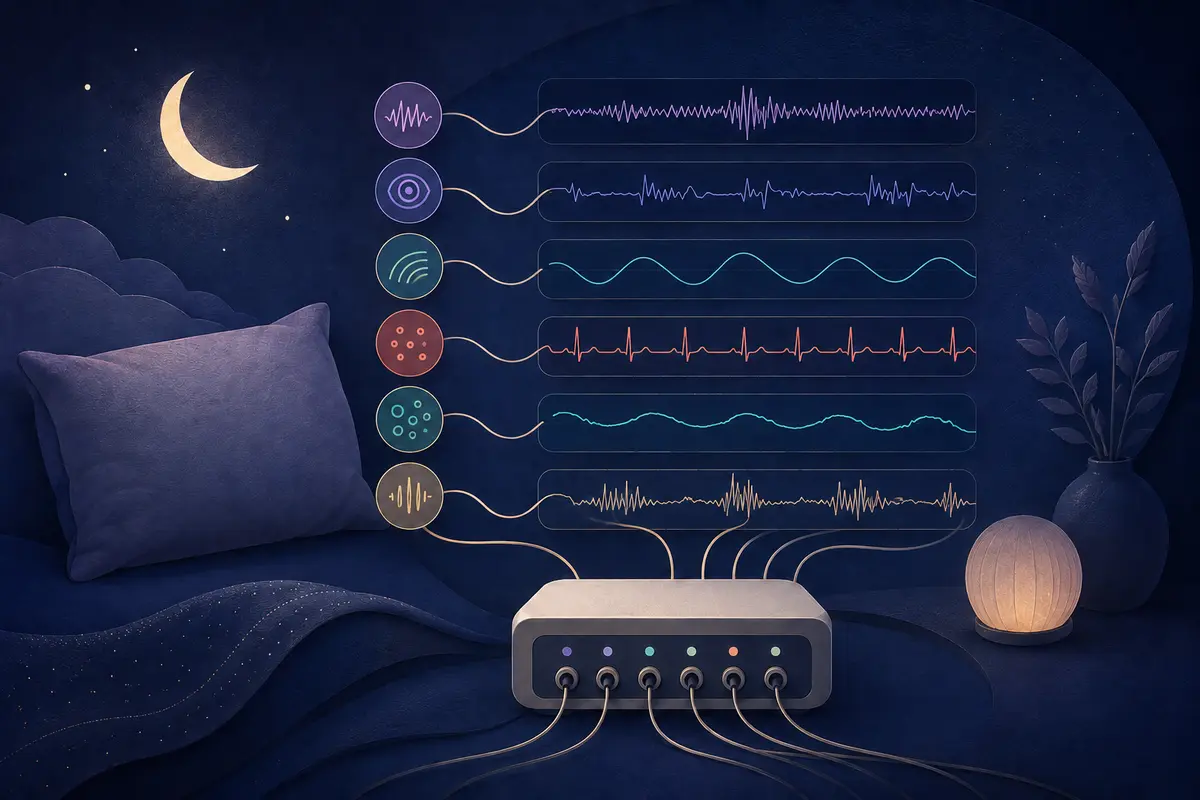
Sensors, preparation, overnight process, results and the difference from a respiratory home study.
Read article →
Insomnia, sleepiness, dream enactment and medicines: understand the causes and prepare for assessment.
Read article →
Deep sleep, night-time release, recovery and common myths: what the evidence actually supports.
Read article →
The general rule, prescribed exceptions and warning signs that mean you should take them off.
Read article →Dose, timing and sensitivity: use six hours as a starting point, not a universal rule.
Read article →Intensity, finishing time, and a simple method to observe your response.
Read article →What sleep may explain — and what it does not — when starting feels difficult.
Read article →Understand the common causes of repeated awakenings, what you can try and when persistent symptoms need medical advice.
Read article →Learn the evidence-based causes of repeated 3 AM waking, the myths the clock time cannot prove and practical next steps.
Read article →Follow an evidence-based stimulus-control plan without clock-watching, forcing sleep or turning the bed into a place of struggle.
Read article →Separate an overheated room from recurrent night sweats and recognise warning signs that deserve medical advice.
Read article →Compare 10, 20 and 90-minute naps, understand sleep inertia and find a time that protects your night sleep.
Read article →Use a 5 to 10-minute micro-nap as a short rest without forcing sleep.
Read article →Find a nap time that fits your bedtime, chronotype and tendency to struggle with sleep.
Read article →Understand sleep inertia and adjust nap duration, timing and your wake-up buffer.
Read article →Compare napping before and after training, useful durations and the wake-up buffer.
Read article →Plan a short workplace nap with a safe place, alarm, wake-up buffer and clear limits.
Read article →Learn how a caffeine nap works, how to time a short nap and when this method should be avoided.
Read article →Explore the biological mechanisms of sleep, its cycles and its essential roles for the body and brain.
Read article →Learn how sleep quality, awakenings, body clock and sleep apnoea can affect recovery, and when to seek advice.
Read article →See recommended sleep duration from newborns to older adults, how naps count and how to judge whether you get enough sleep.
Read article →Try a practical seven-step method grounded in CBT-I principles and learn when persistent insomnia needs professional help.
Read article →Calculate a realistic bedtime from your wake-up time and sleep need without treating 90-minute cycles as an exact rule.
Read article →Estimate weekly sleep debt without false precision and build recovery across several nights.
Read article →Understand the role of dose and sensitivity, then test a practical caffeine cut-off before bedtime.
Read article →Use 18°C as a practical starting point, then adjust room temperature, bedding and airflow to your comfort.
Read article →Compare sleeping positions for reflux, snoring, sleep apnoea, pregnancy and pain, with practical pillow adjustments.
Read article →Understand snoring mechanisms, risk factors and evidence-based options, including when sleep apnoea should be considered.
Read article →Review common sleep problems, their causes and practical ways to improve sleep sustainably.
Read article →Understand REM sleep, its roles, why we dream and practical habits that can protect this sleep phase.
Read article →Explore sleep, naps, breaks and lifestyle strategies that support cognitive recovery.
Read article →Review the major recovery levers, including sleep, nutrition, hydration, active recovery and training load.
Read article →Learn how sleep duration, sleep quality and sleep apnoea can affect cardiovascular health.
Read article →Read clear answers to common questions about sleep duration, insomnia, snoring, naps and recovery.
Read article →Explore insomnia, sleep apnoea, melatonin, sleep paralysis, REM sleep, deep sleep and bedtime routines.
Read article →Three priority evidence-based guides built around distinct search intents without duplicating existing pages.
Identify your natural timing without confusing chronotype, sleep debt and social constraints.
Read the guide →Understand workday/free-day mismatch and reduce it without sacrificing sleep duration.
Read the guide →What research shows about REM sleep, dose, breathing and night-time sleep quality.
Read the guide →Splitting adequate sleep into a main sleep plus a nap is very different from extreme schedules designed to cut total sleep.
Biphasic sleep, polyphasic schedules, Uberman and segmented sleep: what research says, why extreme sleep restriction is risky, and when naps can help.
Read the guide →Why ordinary sounds can wake some sleepers, and how to separate noise sensitivity from broader sleep fragmentation.
Light sleep and waking to every noise: N1/N2 sleep, arousal threshold, stress, earplugs, white noise and other causes of fragmented sleep.
Read the guide →Deep sleep is concentrated early in a sleep episode, but midnight is not a biological deadline. Here is what matters more.
Is sleep before midnight really more restorative? Deep sleep, circadian timing, chronotype, duration and regularity explained with evidence.
Read the guide →Often harmless, sometimes linked to nasal obstruction or snoring, and worth understanding before trying to force the mouth closed.
Why do you sleep with your mouth open? Nasal blockage, allergies, snoring, sleep apnea, dry mouth and mouth taping: causes, risks and safer next steps.
Read the guide →