
Circadian rhythm: how can you reset your body clock?
Circadian rhythm is a biological system of roughly twenty-four hours that organises sleep and wakefulness as well as temperature, hormones, attention and many other functions. An internal clock generates the pattern and daily cues—especially light—synchronise it. The clock cannot be reset in one night; it shifts progressively through repeated signals placed at appropriate times.
01Key points
- The circadian clock and homeostatic sleep pressure are distinct but interacting systems.
- Light is the strongest synchroniser; its effect changes with biological time.
- Morning light generally advances timing, while evening light generally delays it.
- A coherent wake time is often a better anchor than forcing bedtime without sleepiness.
- Social jet lag, insomnia and a circadian disorder can resemble one another but need different responses.
What is circadian rhythm?
“Circadian” means approximately one day. In humans, cells in the suprachiasmatic nuclei of the hypothalamus coordinate internal rhythms. Inserm describes the time organisation of many functions and the major synchronising role of light.
The clock is not an isolated timer. It receives light information through the retina, coordinates signals across the body and interacts with meals, activity and the social environment. Without regular cues, internal timing can drift relative to a twenty-four-hour day.
The clock and sleep pressure
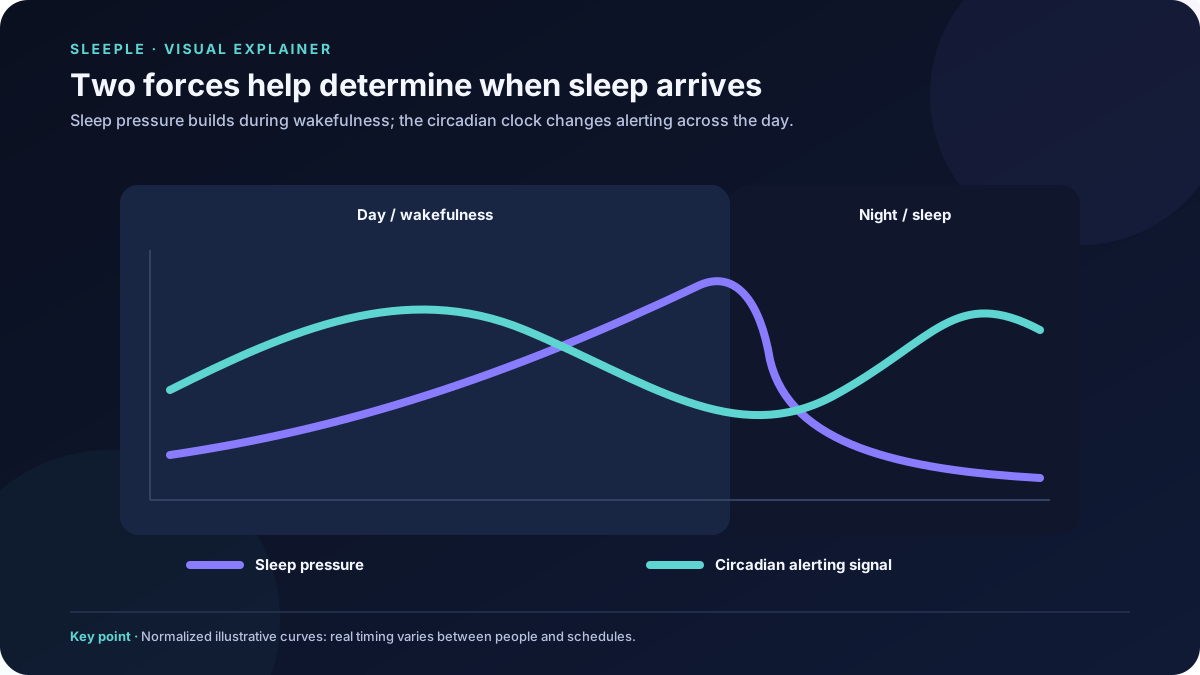
Sleep reflects two major forces:
- Homeostatic pressure: builds during wake and declines during sleep.
- Circadian signal: supports alertness or sleep according to biological time.
You can therefore feel exhausted after a long day yet remain unable to sleep while the circadian system still promotes alertness. Conversely, habitual timing can create sleepiness even after a nap has lowered pressure.
That interaction explains why “go to bed early” may fail. If the clock is not ready and pressure is weak, bed becomes a waiting place.
02Which signals set the body clock?
Light
Light is the strongest synchroniser. The eye sends information to the circadian system beyond visual perception. Intensity, spectrum, duration, previous light exposure and timing all affect the response. Outdoor daytime light is often far brighter than indoor lighting.
Timing is crucial. Light in one part of the biological night may delay the clock; in another part it may advance it. “Morning” and “evening” are practical labels, while the true reference is the person’s biological time.
Meals
Meal timing gives information to peripheral clocks in organs. It does not replace light for the central clock, but major irregularity can add conflicting timing. Coherent meals within the chosen day support consistency.
There is no universal dinner hour. Work, culture, metabolic health and bedtime differ. Avoid unnecessary large daily swings.
Physical activity
Activity and social routines provide cues. An outdoor walk combines movement and light. The timing of intense exercise may influence arousal in some people, but response varies.
Temperature and social environment
Core body temperature follows an internal rhythm, while the environment and behaviour can support or impede transitions. Work, school and social timing structure the day. When external demands oppose natural timing, social jet lag can appear.
03How can you tell whether the clock is misaligned?
Clues include:
- inability to sleep at the desired hour but easy sleep several hours later;
- very difficult morning waking that improves on free days;
- good sleep on a chosen consistently late or early schedule;
- a large weekday-weekend difference;
- strong sleepiness at a time incompatible with obligations;
- change after travel, night work or holidays;
- a schedule that progressively drifts.
These clues do not make a diagnosis. Insomnia can delay sleep on every schedule; apnoea can cause difficult waking; depression can change sleep; chronic restriction can create weekend recovery.
A diary is more useful than one night
For at least two weeks, record sleep, naps, light, work, meals and activity. Include days without an alarm. The contrast between required and free schedules is informative.
A watch may estimate timing but does not directly measure circadian phase. Specialist settings can measure markers such as dim-light melatonin onset, but these are not needed for every schedule problem.
04Chronotype, preference and circadian disorder
Chronotype is the tendency toward earlier or later activity. It changes with age, genetics and environment. Being an evening person is not a disease. A disorder is considered when timing creates persistent distress or conflict with obligations.
The NHLBI describes:
- delayed sleep-wake phase;
- advanced sleep-wake phase;
- irregular sleep-wake rhythm;
- non-24-hour sleep-wake rhythm;
- shift-work and jet-lag disorders.
Diagnosis requires a history and sometimes measurement. Do not assign yourself a disorder because you enjoy late nights.
05Which direction should timing move?
Advancing the clock
Advancing means sleeping and waking earlier. This is common after late holidays or with delayed timing. Common cues include progressively earlier waking, light after rising, daytime activity and less intense late light.
Delaying the clock
Delaying means sleeping and waking later. It may be appropriate for very advanced timing. Light strategy differs: very early light could reinforce the advance. Professional advice is preferable, particularly for a light box.
Stabilising before shifting
Sometimes the main issue is not simply “too early” or “too late” but constant alternation. First reduce the day-to-day swing. A stable but imperfectly placed clock is easier to move than a changing one.
06A general plan to advance timing
This plan suits a mild shift without contraindications; it does not replace treatment for a diagnosed disorder.
1. Select the target wake time
Choose the required time and calculate the current gap. If you wake at ten and need seven, one alarm at seven will not automatically create an ideal early bedtime. Move wake time in tolerable steps across days.
There is no universal fifteen- or thirty-minute increment. Speed depends on the difference, obligations and tolerance. Faster change may be necessary but creates temporary restriction.
2. Seek light after waking
Open curtains immediately and go outside where possible. Walking combines light and activity. In winter or before dawn, use adequate ordinary lighting first and seek advice before therapeutic light.
Do not stare at the sun. Circadian light exposure does not require looking at a source.
3. Organise the day
Place meals, activity and work within the new day. Avoid moving the first meal by several hours from one day to the next. Daytime activity helps define the contrast with evening.
4. Manage naps
A long late nap reduces sleep pressure and delays onset. If safety requires a nap, use an earlier cautious format and allow for sleep inertia. Never drive while sleepy.
5. Reduce late signals
Lower brightness and stimulating content toward bedtime. Light is only one screen pathway; work, gaming, notifications and displacement matter. Use concrete boundaries.
6. Wait for sleepiness
Do not spend hours in bed trying to force an advance. Begin the wind-down earlier, but enter bed with genuine sleepiness. Regular waking and light should gradually move the window.
07A general plan to delay overly early timing
Advanced timing presents as very early evening sleepiness and very early waking, with good sleep on that schedule. Delaying commonly involves maintaining later activity and light in the latter part of the day while avoiding a strong very-early signal that would advance the clock further.
The useful “late day” depends on biological phase. An intense lamp at an improvised hour can impair sleep onset or move timing the wrong way. Seek specialist advice for a precise plan. Our early-waking guide also helps examine alternative causes.
08Natural light or light therapy?
| Source | Use | Limit or caution |
|---|---|---|
| Outdoor light | Daily anchor, broadly available | Weather and season change intensity |
| Ordinary indoor light | Supplement before dawn or in bad weather | Often much less intense |
| Dawn simulator | Gentler transition for some people | Variable effect, not diagnostic |
| Therapeutic light box | Targeted circadian intervention | Timing, intensity and contraindications |
The NHLBI lists light therapy and melatonin among possible treatments. “Possible” does not mean unsupervised use for every difficulty.
09Melatonin: a timing signal, not a sleep switch
Endogenous melatonin carries night-time information. A product can shift phase depending on administration time. Poor timing can be ineffective or oppose the goal. Dose, formulation and product quality vary.
Seek advice with pregnancy, breastfeeding, health conditions, other medicines, bipolar disorder, children or driving. The AASM guideline for selected circadian disorders evaluates specific indications rather than endorsing universal self-treatment.
Do not combine melatonin, sedatives and alcohol without advice. A supplement cannot compensate for wake time and light moving every day.
10Can a shift worker really reset the clock?
Night work creates an ongoing biological conflict. Complete adaptation is not always possible, particularly with fast rotations and daytime life on days off. Planning needs:
- rotation direction and speed;
- light during the shift and commute;
- timing of the main sleep;
- naps;
- caffeine;
- transport;
- family responsibilities.
Safety comes first. Occupational health can advise on adjustments. Dark glasses during a commute, a dark room or targeted light may be discussed, but they must be compatible with safe driving and the intended shift.
11Jet lag
Jet lag occurs when the clock remains aligned with the departure zone. The CDC Yellow Book explains that direction, number of time zones, light timing, sleep and melatonin affect adjustment.
For substantial travel, begin moving the schedule a few days before where practical, protect sleep before departure and plan light at destination. Precise timing depends on the journey. An app does not replace professional advice for someone at risk.
12Mistakes that block adjustment
| Mistake | Consequence |
|---|---|
| Changing bedtime only | The clock receives little new signal |
| Sleeping very late after every bad night | Target waking moves away |
| Bright late light while trying to advance | Timing may delay |
| Strong early light with an already advanced phase | Waking may become earlier |
| Long late nap | Lower sleep pressure |
| Late caffeine to compensate | Next onset may be disrupted |
| Trying to move three hours in one night | Restriction and abandonment |
When should you seek advice?
Arrange assessment when:
- the mismatch has continued for months and affects work or education;
- sleep is good only on an incompatible schedule;
- timing drifts each day;
- rotating shifts create severe sleepiness;
- you doze at the wheel or during active situations;
- apnoea, restless legs, insomnia or a mood disorder is possible;
- you plan intense light or melatonin with a possible contraindication.
An extreme reduction in sleep need with elevated energy, agitation and changed behaviour needs prompt assessment. It is not simply a shifted clock.
14Frequently asked questions
How long does it take to reset a sleep schedule?
It depends on the gap, direction, light and consistency. I cannot confirm a universal number of days. A mild shift may change over several days, while a circadian disorder needs longer and tailored care.
Can an all-nighter reset the clock?
It raises sleep pressure but may not place the clock correctly and creates dangerous sleepiness. The rebound can be temporary. Progressive change is generally safer.
What is the ideal wake time?
One that meets obligations, allows enough sleep opportunity and can remain coherent. There is no biologically superior hour for everyone.
Why am I tired but not sleepy at night?
Fatigue and sleep propensity differ. The clock may still support wakefulness, especially after late light or with evening chronotype.
Are blue-light glasses enough?
They do not control every wavelength, total intensity, content or bedtime delay. They may reduce part of the signal depending on the product, but do not replace exposure management.
Must meals occur at fixed times?
A coherent range supports the day, but minute-level rigidity is unnecessary. Adapt to medical and social needs.
Does one weekend undo progress?
A large difference may shift timing, but one evening does not destroy everything. Limit repeated swings and return to anchors without punishment.
Can a watch measure circadian phase?
It estimates sleep and activity, not exact biological phase. Timing trends are useful; diagnosis relies on history, diary and sometimes specialist markers.
15Understanding the phase response to light
The same light does not have the same effect at every hour. Chronobiology describes a phase-response curve: exposure during the biological evening and early biological night tends to delay the clock, while exposure in the later biological night and biological morning tends to advance it. A transition lies between those zones.
This explains why recipes based only on civil time can fail. At 7 a.m., a night worker may be close to their biological evening, while an early riser is well into their morning. A person with markedly delayed timing may also receive “morning” light at a different biological point from an aligned person.
You do not need to calculate a curve to benefit from normal daylight. It becomes critical when high-intensity exposure is intended to treat a disorder. That is why this guide does not prescribe an exact light-box schedule.
Intensity, duration and consistency
A brief dim exposure is not equivalent to sustained outdoor daylight. More intensity is not automatically better. Eye comfort, migraine, agitation, timing and feasibility matter. A repeated moderate daily signal can be more useful than one very strong session followed by inconsistent days.
Previous light history also changes sensitivity. Someone who spends the entire day in a dim interior has a different day-night contrast from someone outdoors. First build a genuinely light daytime and a less intense evening.
Why “blue light” is an incomplete shorthand
Short-wavelength light can strongly influence the circadian system, but brightness, distance, duration, timing and the rest of the spectrum also matter. Focusing only on blue light encourages the mistaken belief that an orange filter makes a very bright screen or delayed bedtime irrelevant.
Use “light management” rather than “blue-light elimination” as the practical concept. Lower overall brightness, reduce proximity and stop content that displaces sleep.
16An example ten-day adjustment
Imagine an adult who sleeps around 1:30 a.m. to 9:30 a.m. and needs to approach a 7:30 a.m. wake time. This is an illustration, not a prescription for a severe disorder.
Days one to three
Waking moves toward nine. The person goes outside shortly afterwards, eats the first meal and begins activity. They avoid a late nap. In the evening, work and very bright light decrease, but they do not get into bed at ten without sleepiness.
Days four to six
Waking advances again as tolerated. Light, meals and activity follow the new time. Bedtime moves when sleepiness appears. The person does not declare failure after one evening with slow onset.
Days seven to ten
Waking approaches the target and stays stable, including a realistic weekend range. Morning signals become automatic. Travel is adapted if daytime sleepiness is strong. If timing does not move despite consistent application, assessment is more appropriate than escalating deprivation.
The example shows why signals move together. Changing only the alarm while leaving meals, light and activity late sends a less coherent message.
17Four patterns that can look similar
Possible delayed phase
The person cannot sleep before two or three, struggles to wake for work and sleeps well from three to eleven on free days. The full rhythm is late. A diary and assessment can determine whether the pattern goes beyond evening preference.
Sleep-onset insomnia
The person struggles at bedtime on different schedules, worries about sleep and remains awake in bed. Free days do not automatically restore stable sleep. CBT-I may be more relevant than phase shifting alone.
Voluntary restriction
The person could sleep at eleven but continues activities until one and must rise at 6:30. Opportunity is the primary issue. Morning light may support alertness but cannot replace closing the evening.
Apnoea or fragmented sleep
The person allows enough time but wakes with difficulty, snores and dozes during the day. Circadian timing does not explain observed breathing pauses. Sleep assessment is the priority.
Depression or another health condition
Low energy, early or late sleep and difficulty rising can occur with mood disorders and illness. A schedule chart cannot diagnose them. Persistent low mood, loss of interest, suicidal thoughts or major physical symptoms need clinical attention.
18Using meals and exercise without overpromising
A coherent first meal after waking and meals distributed through the chosen day reinforce organisation, especially after travel or holidays. Do not believe that breakfast at one exact hour resets the brain by itself. Light remains the dominant central-clock signal.
Daytime physical activity provides a cue and supports sleep pressure. If intense late training maintains alertness, move it progressively. If you tolerate it, there is no need to ban all evening exercise.
For night workers, a heavy meal in the biological night may cause digestive or metabolic problems, but advice depends on the shift and health. Seek a strategy that fits work rather than copying a day worker’s schedule.
What about fasting?
Claims that a particular fasting interval rapidly resets the body clock exceed what can be recommended universally. Meal timing affects peripheral rhythms, but fasting also carries medical and practical risks for some people. Diabetes, pregnancy, eating disorders and medicines require particular caution.
Do not use prolonged fasting as a substitute for light, coherent waking or travel planning. Discuss dietary changes with an appropriate clinician.
19What should you do after a late exception?
After a late evening, return toward the wake target within a range that does not compromise safety. Seek daylight and resume meals and activity. Avoid alternating between punitive deprivation and an extreme sleep-in.
If the exception is illness, rest according to health needs; the protocol is secondary. Resume anchors when the acute episode resolves. A body clock is shaped by the trend, not perfection.
Travel across only one or two time zones
For a short trip, complete adjustment may not be needed. Consider the length of stay, commitments and return. Maintaining part of the home schedule may be more practical than shifting twice, but safety and local obligations come first.
Do not automatically take melatonin because a flight is international. Direction, timing and the individual determine whether it is appropriate.
20Why can a disciplined plan fail?
The direction may be wrong, light may be too weak, timing may remain variable or the diagnosis may differ. Pain, apnoea, medicine, depression and insomnia can maintain symptoms. A strongly expressed chronotype can also limit the realistic shift.
Failure to fall asleep early is not proof of weak motivation. Document what was applied, sleepiness, free-day timing and function. A clinician can revise the hypothesis or timing.
The plan itself can remove too much sleep
Advancing an alarm quickly while sleep onset remains late temporarily shortens sleep. Some restriction may occur during adjustment, but severe or prolonged loss increases accident risk and can make adherence impossible. Slow the plan or seek guidance rather than escalating.
If driving, healthcare, childcare or hazardous work is involved, safety determines the rate of change. A theoretical target is not worth a near miss.
21Indicators of progress
Do not track sleep onset alone. Review:
- ease of waking;
- first evening sleepiness;
- weekday-weekend difference;
- alertness during obligations;
- need for naps;
- total sleep duration;
- social feasibility.
A thirty-minute advance accompanied by dangerous daytime sleepiness is not complete success. The target is timing compatible with life and adequate sleep.
Use ranges rather than exact minutes
Circadian timing and sleep onset vary. A wake range and bedtime-sleepiness window are more realistic than minute-level targets. This also reduces clock watching.
A wearable can assist with broad timing, but judge success through function. If the device and experience disagree, symptoms and safety deserve more weight.
22Special cautions
Bright-light exposure can trigger agitation or mood elevation in susceptible people, and retinal disease or photosensitising medicine may change safety. Migraine and severe eye discomfort also merit caution. Ask a clinician before therapeutic intensity.
Melatonin products differ across countries in regulation and content. More is not necessarily better, and an immediate-release product is not interchangeable with prolonged release. Keep medicines and supplements away from children.
People who are blind or have severely impaired light perception can develop specific non-24-hour patterns and need specialist evaluation. Ordinary visual brightness advice may not apply in the same way.
23What to bring to a sleep or circadian consultation
Bring two to four weeks of sleep timing, work days, free days, naps, light exposure and medicines. Include travel, alarm-free timing and the hour when sleepiness first appears. Describe whether sleep quality is good when you follow your preferred schedule.
List every attempt: morning outdoor light, reduced late light, melatonin timing and dose, and schedule changes. This helps distinguish inadequate application from an incorrect direction or another condition.
The clinician may use a longer diary, actigraphy or specialised phase testing. Not every case needs laboratory measurement; the question and severity determine the method.
24Conclusion
Resetting the body clock means repeating coherent signals, not winning a fight against sleep. Wake time, light, activity, meals and naps operate as a system. Direction and timing matter.
Stabilise first, then shift progressively. Use ordinary daylight before a therapeutic lamp and treat melatonin as a timing intervention, not a universal sleeping pill. If timing remains incompatible, drifts or creates danger, assessment can distinguish chronotype, circadian disorder, insomnia and other causes.
25Main sources
Evidence last checked: 17 August 2026.
- Inserm — Chronobiology
- NHLBI — Circadian rhythm disorders
- NHLBI — Sleep-wake cycle
- NHLBI — Types of circadian rhythm disorders
- NHLBI — Causes of circadian rhythm disorders
- NHLBI — Treatment of circadian rhythm disorders
- Auger RR et al. — AASM guideline for intrinsic circadian rhythm sleep-wake disorders
- CDC Yellow Book — Jet lag disorder
General information: this guide does not prescribe individual light-therapy or melatonin timing. Do not drive when sleepy and seek advice when risk factors apply.
How this guide was built
Sleeple separates scientific evidence, verifiable specifications and marketing claims. Limitations are stated, and affiliate compensation never determines our conclusions. See our method →