
How to reset your sleep schedule before returning to work or school
During a holiday, bedtime and wake time can drift by several hours. Returning to work or school then requires an early alarm before the body clock is ready. The most reliable way to reduce the shock is to move the whole day gradually—especially waking and light—rather than forcing an extremely early bedtime the night before.

01Key points
- Wake time is the main anchor; bedtime follows progressively.
- An all-nighter is unreliable and creates a major sleepiness risk.
- Morning light generally supports an earlier schedule, while late light can maintain delay.
- The plan must preserve enough sleep and remain compatible with driving, work and education.
- Adolescent biological timing and early school starts are real constraints, not laziness.
Why do holiday schedules drift?
The alarm disappears, social activity extends later and evening light increases. A later wake time reduces sleep pressure at the next bedtime, which then becomes later. Within days, the calendar can perpetuate itself.
That change is not necessarily a disorder. It may reveal natural chronotype: an evening person follows later timing when obligations disappear. The problem begins when the return date requires a different schedule.
The domino effect
- a longer evening;
- later sleep;
- later waking;
- later light and first meal;
- little sleepiness at the former bedtime;
- another late evening.
Reverse it by changing morning and daytime cues first. Merely getting into bed three hours earlier often produces a long wait.
02How many days do you need?
There is no universal speed. Size of the shift, chronotype, consistency, season and obligations all modify adaptation. A small gap may improve across a few days; several hours usually require more.
In the context of jet lag, the CDC Yellow Book advises moving timing in the days before travel where practical. Progressive preparation is also useful for returning from a holiday, although travel across time zones and a home schedule shift are not identical.
Start when the date is known. A ten-day plan is not superior to five days if nobody follows it. Consistency and safety matter more than theoretical perfection.
03Calculate the gap
Write down:
- current average wake time;
- required wake time on day one;
- the time when you must be fully operational.
For example, you currently rise at ten, the alarm will be 6:45 and driving begins at 7:30. The gap is not only three hours and fifteen minutes. A safe transition before driving also has to fit.
Review actual bedtime and sleep duration. If sleep is two to ten, changing only the alarm to 6:45 creates a very short night. The plan moves the window instead of simply removing hours.
04A day-by-day plan from day minus ten
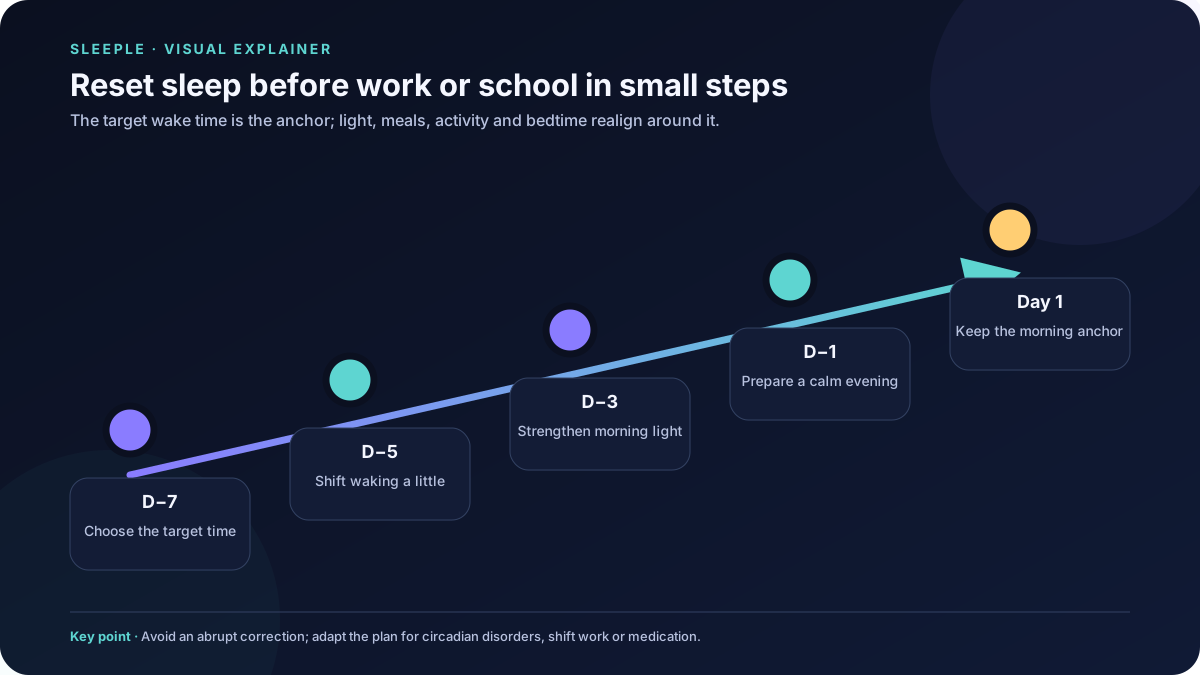
These steps are a framework, not a minute-level prescription.
Days minus ten to minus eight: set the target and begin with morning
Move waking toward the target by a realistic step. Open curtains, go outside and have the first meal in the new morning. Be physically active during the day. Avoid returning to bed.
Begin winding down somewhat earlier but do not enter bed without sleepiness. Reduce the activity that clearly pushes timing: work, gaming, autoplay episodes or messages.
Days minus seven to minus five: move every anchor
Advance waking again. Move meals, activity and light with it. If a nap is essential, keep it earlier and cautious. A long late-afternoon nap removes pressure needed at night.
Move the final caffeine earlier if it has become late. Sensitivity varies; do not impose a universal cut-off, but avoid using stimulants to compensate for every morning of the plan.
Days minus four to minus three: rehearse the actual morning
Rise close to the final time. Test shower, breakfast, commute or preparing children. Rehearsal reveals the true duration and removes decisions from day one.
Lay out clothing, bags, meals and documents. The brain needs a transition after waking, particularly with sleep inertia.
Day minus two: protect continuity
Keep waking, light and activity. Do not “test” one final very late evening. Do not move bedtime extremely early from anxiety either. A simple calm routine is enough.
If sleep does not come and a struggle develops, leave the bed for a quiet dim-light activity and return when sleepy.
Day minus one: avoid the performance trap
Poor sleep before an important return is common. Prepare what you can, hide the clock and remember that an imperfect night does not determine the week. Do not use alcohol, an antihistamine or a new supplement to guarantee sleep.
Keep the planned alarm. Arrange alternative transport if there is a risk of drowsy driving.
05What if you have only three days?
Complete adjustment is unlikely if the gap is large. Concentrate:
- move wake time closer on day one;
- get outdoor light after waking;
- avoid a long late nap;
- move activity and meals earlier;
- reduce late bright light and work;
- protect sleep opportunity;
- plan safe transport.
Do not escalate caffeine and energy drinks until bedtime moves later again. A modest early dose may support some adults, but total intake, health and sensitivity matter.
06What if work or school starts tomorrow?
The clock cannot fully move in one evening. Prepare the morning, choose a realistic bedtime, lower stimulation and allow sleep rather than force it. Use one main alarm and a backup if needed instead of a long snooze sequence.
On waking, use light, gentle movement and a margin before the road. Change transport if too sleepy to drive. The following evening, wait for sleepiness within a coherent range and preserve the next wake time.
Avoid a deliberate all-nighter. It raises sleep pressure but impairs attention, mood and safety and does not guarantee correct circadian placement.
07Light is the strongest lever
Inserm describes light as the principal synchroniser. To advance a late schedule, exposure after the new wake time generally helps, while substantial late-evening light tends to maintain delay.
A simple morning routine
- open curtains immediately;
- go outside as soon as practical;
- walk or eat the first meal in daylight;
- keep living areas adequately lit;
- avoid spending the whole morning in a dark bedroom.
I cannot confirm one universal duration. Weather, season, latitude, age and phase change exposure.
Light boxes
An intense device is a more targeted intervention. Timing, distance and duration depend on the product and goal. Eye disease, photosensitising medicine, bipolar disorder and migraine require advice. Begin with ordinary outdoor light when available.
08Screens: target the actual mechanism
Evening screens contribute through light, content, notifications and bedtime displacement. A filter does not cancel a work conversation, competitive game or autoplay.
Set a closing time for the activity that delays sleep. Lower brightness, keep the phone out of bed and use audio with the screen off. A concrete boundary is more useful than an absolute rule that cannot be kept.
09Naps: tool or obstacle?
A nap can protect safety after a short night but also reduces later sleep pressure and may cause inertia. The choice depends on risk.
If fighting sleep while driving, do not continue. A nap does not guarantee subsequent fitness; leave a recovery period and arrange another option. For schedule adjustment, avoid particularly long and late naps.
A severely restricted adolescent may need recovery, but the long-term solution remains adequate night-time opportunity and a coherent schedule.
10Caffeine, alcohol and meals
Caffeine
Move the final intake earlier and reduce compensatory doses. Coffee, tea, energy drinks and cola add together. Our caffeine guide explains why one universal cut-off is not credible.
Alcohol
It may increase initial drowsiness but fragment sleep and impair waking. Do not use it as a schedule-shifting tool.
Meals
Move the first meal and dinner with the new day without a medically inappropriate abrupt change. A very heavy meal just before bed can cause reflux or discomfort. No food resets the clock alone.
11What about melatonin?
Melatonin is a circadian timing signal. Its effect depends on administration time. It is not a universal product to “knock someone out” before the first day. Poor timing may not help or may shift the clock unexpectedly.
Ask a doctor or pharmacist before use, particularly for a child or teenager, pregnancy, illness, other medicines, bipolar disorder or driving. Product quality and formulation differ.
The foundation—wake time, light, regularity and activity—remains necessary even when melatonin is prescribed.
12Adapting the plan for children and teenagers
Young people are not small adults. Sleep needs are higher, circadian timing commonly shifts later during adolescence and school imposes a fixed wake time. Prepare as a household:
- advance waking progressively;
- use morning light and activity;
- move meals and homework;
- reduce conflict by creating shared device rules;
- protect age-appropriate duration;
- observe mood and sleepiness.
A teenager who falls asleep in class, cannot wake despite adequate opportunity, snores with pauses or has a major mood change needs assessment. Discipline alone is not treatment.
13Adapting the plan for remote work
Remote work removes commuting, allowing later waking but also removing morning light and movement. Keep a start time, get dressed, go outside briefly before logging in and avoid working in bed.
Before returning on site, add commuting to the calculation. Wake time must leave room for inertia, food and safe travel.
14Returning after night work or rotating shifts
A transition between shifts is different from returning after a holiday. Rotation direction, main sleep, naps, workplace light and commuting must be coordinated. Occupational health is important.
Do not copy a morning-light strategy when you need to sleep after a night shift. Dark glasses may be discussed for the commute, but must not impair driving.
15Common mistakes
| Mistake | Why it fails |
|---|---|
| Forcing bedtime three hours earlier | Clock and pressure do not follow instantly |
| Keeping late waking until the final day | No progressive anchor |
| Pulling an all-nighter | Risk and uncertain phase effect |
| Long late-afternoon sleep | Delays the next onset |
| Compensating with late caffeine | Maintains the cycle |
| Trying a new sedative or supplement | Side effects and unpredictability |
| Driving immediately after the alarm | Inertia and sleepiness |
How should progress be measured?
Track:
- actual wake time;
- first evening sleepiness;
- approximate sleep duration;
- reliance on snoozing;
- morning function;
- afternoon sleepiness;
- remaining gap to target.
Do not judge bedtime alone. If waking moves earlier while sleep becomes much shorter and drowsy driving appears, the plan is too fast. Success combines timing, duration and safety.
17The first week back
Keep the target wake time within a realistic range after an imperfect night. Seek morning light and activity. Avoid pushing bedtime later each evening with unfinished tasks.
A short drop in performance may occur during adjustment. Place demanding tasks after the morning transition where possible. If sleepiness persists or becomes dangerous, do not normalise it; adapt and seek advice.
The following weekend, avoid a several-hour wake shift that recreates the late schedule. Moderate recovery can coexist with an anchor, but protecting more sleep during the week is the better strategy.
18When should you seek advice?
Arrange assessment if:
- the shift persists despite several coherent weeks;
- sleep is good only on an incompatible schedule;
- you doze while driving, working or studying;
- there is loud snoring, breathing pauses or choking;
- waking is impossible despite sufficient duration;
- insomnia, depression, bipolar disorder or a circadian disorder is possible;
- light therapy or melatonin is being considered with risk factors.
Frequently asked questions
When should I start?
As early as reasonably possible, usually several days ahead. The time depends on the gap. A sustainable one-week plan is better than a perfect protocol abandoned.
How much should timing move each day?
I cannot confirm one universal increment. Choose a step that still permits enough sleep and a safe day. A large gap or special constraint warrants advice.
Should a teenager be sent to bed extremely early?
Forcing bed without sleepiness can create a long wait. Move waking, light and the day first, protect duration and gradually reduce late activity.
Can weekends be used for recovery?
Some recovery may help, but a several-hour shift recreates late timing. Keep a moderate range and increase sleep opportunity on work nights.
Must every nap stop?
No, particularly when it protects safety. To advance timing, avoid long and late formats. Allow for inertia.
Why can I not sleep on the night before?
Anticipation, late circadian timing and performance pressure may combine. Prepare, hide the clock, use a calm routine and accept an imperfect night.
Is a light box essential?
No. Outdoor light is an excellent starting point. A therapeutic box can help selected conditions but needs correct timing and precautions.
How long does back-to-work tiredness last?
Duration depends on the shift, prior sleep and obligations. Persistent or worsening sleepiness and associated symptoms should be assessed rather than assigned an arbitrary waiting period.
20Two sample calendars
These tables illustrate a process. Times and speed require adaptation.
Example A: moving wake time two hours in a week
| Day | Approximate waking | Morning action | Evening focus |
|---|---|---|---|
| D-7 | 9:00 | Outdoor light and first meal | No late nap |
| D-6 | 8:40 | Light and a walk | Finish work earlier |
| D-5 | 8:20 | Repeat the routine | Move caffeine earlier |
| D-4 | 8:00 | Rehearse the commute | Wait for sleepiness |
| D-3 | 7:40 | Complete morning rehearsal | Phone outside bed |
| D-2 | 7:20 | Light and activity | Calm evening |
| D-1 | 7:00 | Target routine | Do not force sleep |
The schedule is not a requirement to move exactly twenty minutes. Slow down if duration becomes inadequate. If the date cannot move, reduce hazardous tasks and arrange support instead of escalating restriction.
Example B: highly irregular timing
A person rises anywhere from nine to noon and sleeps between one and four. Before advancing, they spend several days narrowing waking to a range around 9:30. Light, meals and activity begin from that anchor. Only then does waking move earlier.
Stabilisation stops the body clock receiving a different target each morning. It consumes part of the preparation window but creates a coherent signal.
21What if sleep does not follow the alarm?
During the first days, wake time can advance before evening sleepiness. Temporary restriction explains some fatigue. Do not accelerate further on the assumption that extreme exhaustion will force the clock.
Keep light and timing cues, avoid bed without sleepiness and protect the evening. Use stimulus control if alert and frustrated. A progressive plan should eventually move sleepiness; if it does not, review late light, naps, caffeine, chronotype and possible disorders.
Chronic insomnia needs a different response. CBT-I combines stimulus control, structured time-in-bed adjustment and work on sleep-related worry. A back-to-school calendar cannot treat established insomnia by itself.
What if you become sleepy too early?
If the schedule moves beyond the target and you begin dozing in the early evening, check whether waking was advanced too fast or total sleep is inadequate. Avoid an unplanned sofa sleep that fragments the night. Use ordinary light and activity until a reasonable bedtime, without intense exposure close to sleep.
A persistent very early pattern may represent advanced timing or another cause. Do not continue advancing simply because the plan originally moved in that direction.
22Reduce practical friction
Prepare the household
If several people return, move meals and evening quiet together. One person cannot easily sleep earlier while the home still follows a holiday night. Agree on muted notifications and prepare belongings as a group.
Tell friends and colleagues
Decline a late event temporarily when it compromises day one, but do not turn the plan into isolation. Explain the date and limited duration. Cooperation is more effective than blame.
Use alarms intelligently
Use one main alarm and a backup. Avoid a ten-alarm sequence starting unnecessarily early. Prepare ordinary light and get up after the alarm instead of cycling through brief sleep fragments.
Plan transport
Test its duration and alternatives. The first early commute may combine inertia, darkness and sleep debt. Public transport, a rested driver or remote start where available may lower risk.
23The role of schools and employers
Sleep is not solely an individual responsibility. Very early starts, rotating shifts, late messages and long commutes reduce opportunity. Employers can help through predictable schedules, fewer abrupt changes and formal fatigue-risk management.
For a student, families and schools should take dozing, repeated lateness and mood change seriously. A temporary adjustment may be discussed during medical assessment. Punishment without understanding the mechanism can worsen the situation.
People with illness or disability may need accommodations. Healthcare and relevant institutional services determine what is justified; this article cannot provide certification.
College and university students
New students may combine late social activity, early classes, unfamiliar housing and caffeine. Rather than attempting a perfect routine immediately, protect the earliest required mornings and set a latest sustainable social bedtime on other nights. Avoid alternating an all-nighter with a day-long sleep.
If sleep, mood or functioning deteriorates, use campus health services early. Academic difficulty and severe sleepiness should not be treated only as time-management failures.
24Consolidating after the first week
Keep wake time and morning light. Reintroduce social activity within a reasonable variation, then observe whether sleepiness remains aligned. If every weekend shifts timing, narrow the gap or create more sleep opportunity on weekdays.
Do not maintain a schedule that leaves inadequate duration. Timing and sleep debt are different problems: one concerns when, the other how much. Success requires both.
After two to three weeks, if waking remains impossible or sleep occurs only very late, bring the diary to an appointment. The explanation may be delayed phase, insomnia, restriction, apnoea or another condition.
25Failure signals that require changing the plan
- sleep gets shorter every night;
- drowsy driving appears;
- mood deteriorates substantially;
- caffeine or sedatives increase each day;
- timing does not move despite coherent cues;
- snoring with pauses or choking is observed;
- the plan triggers unusually high energy and a markedly reduced need for sleep.
Do not respond by doubling the discipline. Slow down, secure daily activities and seek advice.
26What if the return date changes?
If work or school is postponed, do not swing immediately back to the holiday schedule. Keep a middle target or continue gradually if the new date is close. A predictable system is easier to shift than repeated reversals.
If the start becomes earlier, recalculate sleep opportunity before moving the alarm. Remove optional morning tasks and organise transport rather than simply cutting another hour.
27How parents can support without creating bedtime conflict
Agree on the target and morning actions during the day, not during an argument at midnight. Adults can model the household device boundary and move breakfast and light together. Praise following the process rather than whether sleep occurred on command.
Do not repeatedly ask “Are you asleep yet?” or monitor a teenager’s tracker minute by minute. If they remain awake, use a calm low-light activity and return to bed with sleepiness. Seek help for persistent impairment.
28A first-day checklist
The night before, prepare clothing, food, keys, transport information and a backup alarm. On waking, use light, get upright, drink and eat according to normal health needs, and allow a transition before demanding work.
During the day, seek daylight and activity, limit late compensatory caffeine and avoid a long evening nap. Expect some imperfection. Return to the planned evening without trying to repay the whole deficit at once.
If attention becomes unsafe, stop the activity. The schedule can continue tomorrow; an accident cannot be undone.
29Conclusion
Resetting sleep before work or school is a calendar process, not a feat of willpower on the final night. Move waking and morning light, then place meals, activity, caffeine and naps around the new day. Let bedtime follow sleepiness.
Start early, move at a rate that preserves safety and rehearse the first morning. When the mismatch persists or hides a disorder, assessment is more useful than an all-nighter, improvised lamp or new product.
30Main sources
Evidence last checked: 17 August 2026.
- Inserm — Chronobiology
- NHLBI — Sleep-wake cycle
- NHLBI — Circadian rhythm disorders
- CDC Yellow Book — Jet lag disorder
- NHS — How to fall asleep faster and sleep better
- Assurance Maladie — How to sleep better
- Auger RR et al. — AASM circadian rhythm guideline
General information: this plan does not prescribe light therapy or melatonin. Safety while driving and working takes priority over reaching a schedule.
How this guide was built
Sleeple separates scientific evidence, verifiable specifications and marketing claims. Limitations are stated, and affiliate compensation never determines our conclusions. See our method →