Sleep and mental health: understanding the two-way relationship
Sleep shapes emotional regulation, while anxiety, depression and stress can disrupt nights. The relationship is neither a single cause nor a universal quick fix.
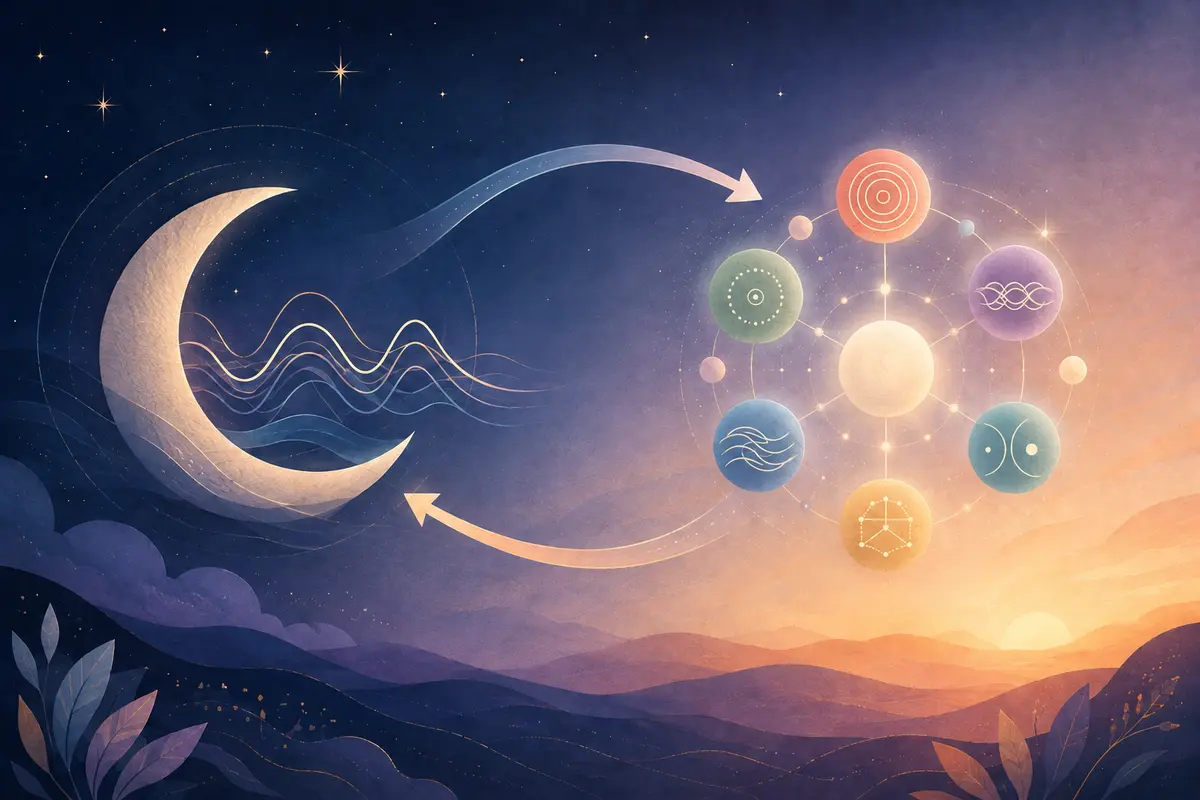
Why is the relationship described as two-way?
Sleep supports alertness, memory and emotional regulation. The US National Heart, Lung, and Blood Institute states that enough quality sleep at appropriate times helps protect mental health. This does not mean that every poor night causes a disorder; short-term effects are often temporary.
Mental health difficulties can also alter sleep. Worry may maintain arousal, while depression can involve insomnia, early waking or sometimes prolonged but unrefreshing sleep. The World Health Organization includes disturbed sleep among possible symptoms of depression, alongside a broader persistent pattern.
The loop varies between people. Shift work, pain, sleep apnoea, medicines, substances, the environment and physical illness may also contribute.
What can a poor night change the next day?
- Mood: irritability, impatience or greater sensitivity to stress.
- Emotional regulation: more difficulty stepping back from a negative event.
- Attention: less stable concentration and decision-making.
- Behaviour: cancelling activities, withdrawing or seeking immediate relief.
- Perspective: an already difficult day may feel heavier when fatigue is added.
These responses after one night do not diagnose a mental health condition. Duration, severity, impact and accompanying symptoms matter.
How can anxiety and depression affect sleep?
| Observed pattern | Examples | What it cannot establish alone |
|---|---|---|
| Anxious arousal | Tension, worry, clock-checking and difficulty switching off. | Night-time rumination does not prove an anxiety disorder. |
| Insomnia | Long sleep latency, repeated waking or waking too early. | Insomnia has many possible causes. |
| Long sleep | More time in bed, difficulty getting up and long naps. | Long sleep alone does not diagnose depression. |
| Delayed timing | Bedtime and wake time moving later, with little morning light. | Timing may also reflect social demands or chronotype. |
| Nightmares or restless sleep | Emotional awakenings, distressing dreams or avoiding bedtime. | They cannot identify trauma or another condition on their own. |
Depression is defined by a persistent group of symptoms and functional impact, not by sleep alone.
Which signs deserve clinical advice?
- Sleep difficulty occurring several times a week and continuing over time.
- Low mood, loss of interest, anxiety or irritability affecting work, study or relationships.
- Fatigue or sleepiness that makes driving unsafe.
- A major increase in time in bed, withdrawal or abandoning usual activities.
- Increasing reliance on alcohol, cannabis, sleeping pills or other substances to sleep.
- Periods of unusually high energy with very little sleep, agitation or risky behaviour.
A clinician can assess sleep disorders, medical causes, medicine effects and mental health. I cannot confirm the cause from one symptom.
What helps without reducing the problem to “sleep better”?
- Observe without self-diagnosing. Use the sleep diary to record timing, awakenings, energy, mood and significant events.
- Stabilise time cues. A reasonably consistent wake time, morning light and suitable daytime activity support the body clock.
- Reduce struggle in bed. Spending long periods trying to force sleep can strengthen the bed–tension association.
- Tell someone. A trusted person, doctor or mental health professional can help break isolation.
- Treat both dimensions. Cognitive behavioural therapy for insomnia is a recommended treatment for chronic insomnia; it may complement, but not replace, care for a mental health condition.
A meta-analysis in Sleep Medicine Reviews found that improving sleep can benefit several mental health outcomes. This does not show that a bedtime routine treats every condition.
What can a sleep diary show?
Over seven to fourteen days, a diary may reveal irregular timing, long naps, variable sleep duration or a temporal association between stressful evenings and later sleep. These observations can support a consultation.
They do not prove causation. If mood is lower after a short night, sleep may have contributed, but common factors may explain both. A personal score or correlation is not a diagnosis.
When is urgent help needed?
If you may act on suicidal thoughts, have seriously harmed yourself or cannot keep yourself or someone else safe, call your local emergency number or go to the nearest emergency department now. In the UK, call 999; for urgent mental health help that is not immediately life-threatening, call NHS 111 and select the mental health option. Elsewhere, use your country’s official crisis or emergency service.
Acute distress, thoughts of dying, a risk of self-harm, marked confusion, hallucinations or uncontrolled agitation should not wait for sleep to improve. Safety and urgent assessment come first.
Frequently asked questions
Can lack of sleep cause depression?
It can contribute to risk and worsen symptoms, but it is neither a single cause nor a diagnosis. Depression reflects a wider pattern and multiple factors.
Can anxiety stop you sleeping?
Yes. Worry and arousal can delay sleep or fragment the night. Persistent difficulties are best assessed together.
Is better sleep enough to treat a mental health condition?
No. Sleep improvement may support recovery but does not replace appropriate psychological or medical care.
Should melatonin be used when mood is low?
Not automatically. Melatonin is not a treatment for depression, and its role depends on the sleep or timing problem. Seek advice before using it.
Key points
- Sleep and mental health influence each other.
- A poor night can affect mood without showing that a disorder is present.
- Insomnia, long sleep and delayed timing have several possible causes.
- Improving sleep can help but does not replace appropriate mental health care.
- Immediate danger requires emergency help, not another sleep strategy.