
Sleep hygiene: 10 habits that genuinely help
Sleep hygiene is the set of habits and conditions that support regular sleep: coherent timing, light, activity, sensible use of stimulants, an appropriate environment and helpful behaviour in bed. These measures can prevent difficulties or support vulnerable sleep. They are not, however, a complete treatment for chronic insomnia.
01Key points
- Healthy habits create favourable conditions; they cannot command sleep.
- Not every rule is equally relevant to every person.
- Wake timing and daytime light structure the rhythm more than an elaborate decorative routine.
- Effects of screens, caffeine and evening exercise depend on timing, dose, content and sensitivity.
- When problems continue, investigate the mechanism and symptoms instead of making the rules ever stricter.
What is sleep hygiene?
The term describes behaviours and environmental factors intended to support sleep. Assurance Maladie recommends regular timing, physical activity, a suitable room and sensible stimulant use. The NHS offers similar principles.
“Hygiene” can sound as though poor sleepers have unclean habits or lack discipline. That is not true. Insomnia can persist despite a dark room, no coffee and a perfect routine. Biological, circadian, medical, psychological and behavioural factors interact.
Prevention, support and treatment are not the same
| Goal | Role of sleep hygiene |
|---|---|
| Prevent drift caused by irregular habits | Often useful |
| Improve a recent mild episode | May be enough with observation |
| Support treatment of a condition | Useful as an adjunct |
| Treat chronic insomnia alone | Usually insufficient |
| Diagnose apnoea or hypersomnolence | Impossible |
This protects against two errors: promising that tea and a fixed bedtime cure every insomnia, and declaring habits useless because they are not complete therapy.
02Habit 1: keep wake time reasonably consistent
Wake time gives the body clock a cue and organises sleep pressure for the evening. Differences of a few minutes do not matter. Repeated shifts of several hours, such as between weekdays and weekends, are more relevant.
Choose a time compatible with work, family life and adequate sleep. After a poor night, avoid sleeping into the middle of the day where possible. If sleepiness makes driving dangerous, safety takes priority; adapt the obligation rather than follow a rigid rule.
How to test it
For fourteen days, keep waking within a realistic range. Record when genuine sleepiness appears in the evening. Do not force an extremely early bedtime to compensate; allow pressure to rebuild.
Its limit
Shift work, infant care, illness and on-call duties make regularity difficult. Find the anchors that are available and seek tailored advice rather than blaming yourself.
03Habit 2: allow enough opportunity for sleep
No routine can improve sleep that is continually compressed by the schedule. Count backwards from wake time and include likely sleep onset and the evening transition. Compare the window with your function, not a social-media ideal.
Age-based recommendations are population ranges. They help, but individual need and daytime consequences matter. See how many hours of sleep you need by age.
Too much time in bed can also matter
More opportunity is not always better. Someone with insomnia may spend ten hours in bed to obtain six hours of sleep, increasing wakefulness and frustration. Structured time-in-bed adjustment belongs to CBT-I and requires caution with sleepiness, fall risk, pregnancy, epilepsy and bipolar disorder.
04Habit 3: get daylight in the morning and daytime
Light is the strongest synchroniser of the circadian clock. Daytime exposure, particularly earlier in the day, reinforces the contrast between day and night. Outdoor light is often much brighter than indoor illumination even under cloud.
Open curtains and, where possible, walk or eat outside. Useful duration depends on weather, time, age and circadian timing; I cannot confirm one number of minutes for everyone.
Caution with light therapy
A therapeutic box provides a specific intensity, and timing can advance or delay the clock. Eye disease, photosensitising medicine and bipolar disorder require advice. Our morning-light guide distinguishes ordinary daylight from treatment.
05Habit 4: be physically active
Physical activity supports health, sleep pressure and circadian timing. It may improve sleep parameters but is not an instant sleeping pill. The best activity is sustainable: walking, cycling, resistance work, swimming or another suitable form.
The claim that every evening workout ruins sleep is too absolute. Very intense late exercise may disturb some people through arousal and temperature, while moderate activity suits others. Test your response rather than imposing a ban.
Adapt intensity with professional advice when illness, pain, pregnancy or a return to exercise is involved.
06Habit 5: manage caffeine according to sensitivity
Caffeine temporarily blocks adenosine signalling involved in sleep pressure. Clearance and sensitivity vary. Coffee, tea, energy drinks, cola, chocolate and some medicines contribute.
There is no identical cut-off for everyone. For one or two weeks, move the last intake earlier or reduce the dose, then observe sleep onset, awakenings and alertness. See coffee and sleep.
Do not compensate for chronic restriction with escalating doses. High intake can also aggravate anxiety, palpitations and reflux in some people.
07Habit 6: do not use alcohol as a sleep aid
Alcohol may increase initial drowsiness, which gives it a reputation as a sleeping aid. Later it may fragment sleep, worsen snoring or apnoea and impair alertness. Initial sedation is not the same as restorative sleep.
Observe the relationship between drinking, awakenings and morning function. If alcohol is used nightly for sleep or reducing it feels difficult, seek medical support. Abrupt withdrawal can be dangerous in a dependent person.
Nicotine and other substances also affect arousal and sleep. Their management goes beyond a hygiene rule.
08Habit 7: organise meals and fluids
A very large meal just before bed can promote discomfort and reflux. Going to bed hungry may also interfere. Find timing and quantity that you tolerate. There is no universal “sleep dinner.”
Reducing very high late fluid intake may help some people who wake to urinate, but do not dehydrate yourself. Repeated or new nocturia deserves evaluation.
Supplements and herbal teas are not automatically effective or safe. Check interactions, pregnancy, illness and dose. A pleasant ritual can relax without proving a pharmacological effect.
09Habit 8: create an evening transition
A simple routine signals that demands are decreasing: prepare for tomorrow, reduce activity, wash, read or listen to something calm. It does not need to last two hours or remain identical in every detail.
The routine becomes counterproductive when it resembles an examination: perfect temperature, fifteen supplements, timed breathing, app, journal and fear of missing a step. Choose two or three sustainable actions.
What about racing thoughts?
Set an earlier brief period to list tasks and concerns. Write the next concrete action, then postpone further problem solving. The goal is not to empty the mind but to remove urgency. See our guide to thoughts that keep you awake.
10Habit 9: adapt screens instead of imposing an absolute ban
Screens act through several pathways: light, stimulating content, notifications, work and bedtime delay. A quiet low-brightness video is not identical to competitive gaming or work messages in bed.
Useful changes include:
- lower brightness and avoid holding the screen very close;
- disable notifications;
- set an end time for work and endless scrolling;
- choose audio with the display off;
- keep the phone out of reach when time checking or messages perpetuate arousal.
An orange filter cannot neutralise content or sleep displacement. Conversely, a ban that creates anxiety is not therapy.
11Habit 10: reserve the bed for sleep and leave the struggle
Stimulus control aims to associate bed with sleep rather than work, eating, scrolling and frustration. Go to bed when sleepy. If you remain alert and irritated, get up for a calm activity in dim light and return when sleepiness reappears.
You do not need to wait exactly twenty minutes. Checking the time to apply the rule can increase alertness. Use sustained wakefulness and struggle as the cue.
This is a CBT-I component supported in the AASM guideline. It cannot guarantee immediate sleep; it changes an association progressively. Our full guide on how to fall back asleep after waking up walks through this step by step.
12The room: dark, quiet and comfortable, not perfect
Reduce avoidable noise, intrusive light and uncomfortable temperature. Choose bedding and clothing based on preference and health. No temperature number suits every home and body.
Earplugs, eye masks and background sound may help, while retaining the ability to hear smoke alarms, children and essential warnings. A partner with loud snoring and breathing pauses should not simply be covered by noise; they need assessment.
An expensive bedroom renovation is not the first answer to chronic insomnia. Test specific factors before buying.
13How should you choose among the ten habits?
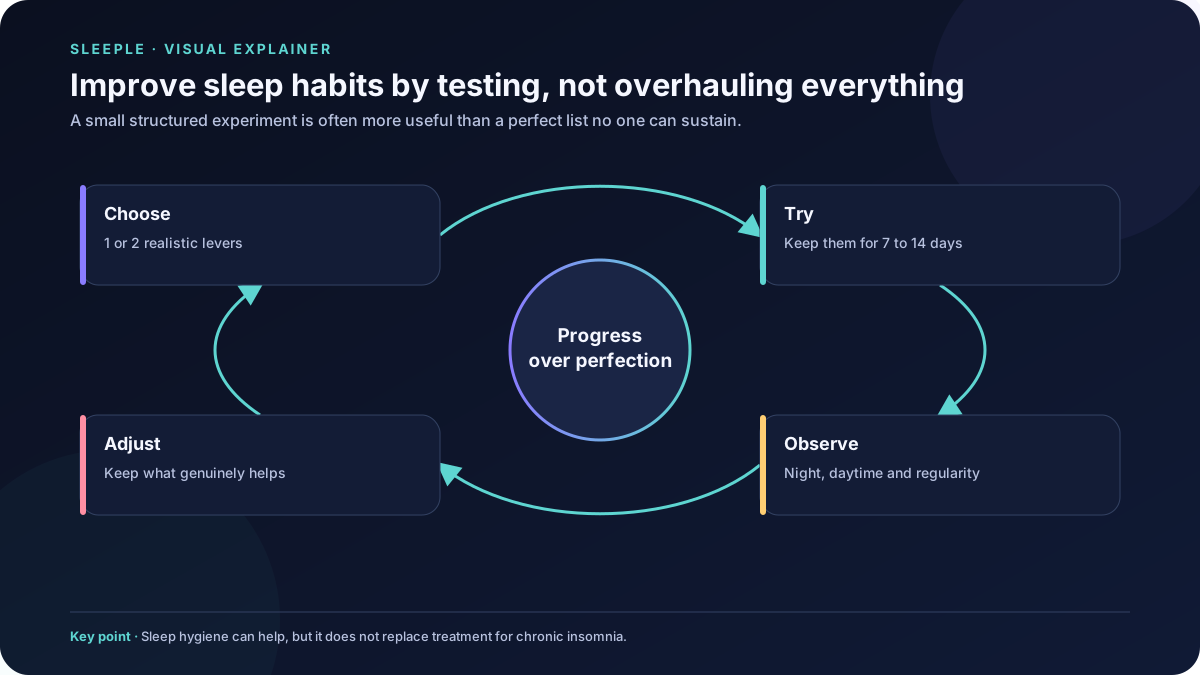
Do not begin with the most popular rule. Start with the observation that fits your pattern.
| Observation | Plausible first lever |
|---|---|
| Wake time varies by three hours | Stabilise it progressively |
| Leisure cuts sleep short | Protect enough opportunity |
| Almost no daytime light | Go outside earlier in the day |
| Late coffee or energy drinks | Move and reduce the final dose |
| Awakenings after alcohol | Test alcohol-free evenings |
| Long frustrated periods in bed | Stimulus control |
| Work continues directly into bed | Short sustainable transition |
| Phone repeatedly delays bedtime | Content limit and phone outside bed |
Test one change for one to two weeks. Measure timing, awakenings, morning state and daytime function. Do not demand a perfect night.
14Why is sleep hygiene not enough for chronic insomnia?
Chronic insomnia often includes hyperarousal, fear of sleep, poorly matched time in bed and learned associations. CBT-I combines education, stimulus control, time-in-bed adjustment, cognitive work and relapse prevention. It is more targeted than a general list.
The AASM guideline recommends against sleep hygiene as a stand-alone treatment. The 2023 European guideline also places CBT-I first. See our adult insomnia guide.
This limit does not make habits irrelevant. It prevents blaming someone whose condition requires structured care.
15A three-week implementation plan
Week one: observe
Record wake and bedtimes, naps, light, activity, caffeine, alcohol, screens and daytime state. Identify the most plausible factor and warning signs such as breathing pauses, uncontrollable sleepiness, pain or very low mood.
Week two: change one lever
Keep the rest as stable as practical. Choose wake time, light, caffeine, alcohol, activity, screen use or stimulus control. Define a concrete action rather than “sleep better.”
Week three: decide
Compare trend, feasibility and daytime function. Retain what helps without rigidity. If sleep remains frequent, distressing or disabling, take the diary to an appointment or CBT-I provider. Do not add nine rules because one did not cure chronic insomnia.
16Situations that require adaptation
Shift work
Classic day-night advice does not always fit. Light, naps and caffeine must be placed around shifts and commuting. Occupational health can help.
Parents and carers
A fixed wake time and long routine may be unrealistic. Seek support, protect available opportunities and avoid drowsy driving. Perfect individual discipline is not the answer to structural sleep disruption.
Teenagers
The clock commonly shifts later. School wake time, morning light, activity and weekend consistency matter. Blame or removing a device without addressing the whole schedule is inadequate.
Illness and pregnancy
Pain, reflux, breathing, urination and medicines change the advice. Ask before supplements, melatonin or time-in-bed restriction.
17Common mistakes
| Mistake | Correction |
|---|---|
| Searching for a perfect routine | Choose a few sustainable actions |
| Banning every screen without analysing use | Target light, content and delay |
| Going to bed early without sleepiness | Keep wake time and await the cue |
| Using alcohol or antihistamines | Find a safer response |
| Changing everything at once | Test one lever |
| Ignoring apnoea or pain | Treat the cause |
| Believing hygiene cures every insomnia | Move to CBT-I when needed |
Frequently asked questions
What is the most important rule?
There is no single rule, but coherent wake time, enough sleep opportunity and daytime light are strong anchors. The factor actually disturbing your sleep remains the priority.
Must bedtime be identical?
A regular range helps, but forcing bedtime without sleepiness may increase wakefulness. Wake time is often the stronger anchor; bedtime can follow sleepiness.
How long before bed should screens stop?
I cannot confirm a universal interval. Analyse brightness, content and delay. A realistic transition without work or endless scrolling is more useful than an impossible number.
When should caffeine stop?
Sensitivity varies. Move the final dose earlier and test for one to two weeks. Total dose and hidden sources matter.
Does a cold bedroom always improve sleep?
Excess heat may interfere, but comfort depends on the person, bedding and season. Adjust progressively.
Must a routine last one hour?
No. Ten to thirty minutes may create a useful transition, but no duration is compulsory. Sustainability and a reduction in demands matter more than length.
Can I exercise in the evening?
Often yes. If very intense late training delays your sleep, move it or reduce intensity. Do not remove beneficial activity because of an absolute claim.
When should I seek help?
When difficulties continue, occur several times a week, impair the day or accompany sleepiness, suspected apnoea, pain, restless legs or psychological distress.
19Design habits so they are easy to keep
An intention such as “never look at my phone again” relies on willpower at the time it is weakest. Change the environment instead: charge the device outside the bedroom, automate night mode, place a paper book on a chair and tell colleagues when messages end. The helpful behaviour should require less effort than the old one.
Use the same principle in the morning. Prepare clothing, leave walking shoes by the door and open curtains as soon as you rise. For caffeine, keep a decaffeinated alternative ready for the final drink. The goal is not a military home. It is to remove repeated decisions.
Use a precise implementation statement
“Exercise more” is vague. “Walk for twenty minutes after lunch on Monday, Wednesday and Friday” can be observed and adjusted. “Use fewer screens” becomes “the phone charges outside the bed from 10:30 p.m.” Measurement is not a judgement; it confirms whether the experiment happened.
Plan the exception
Decide in advance what follows an event, journey or on-call night. Return toward the usual wake time within a realistic range, seek daylight and do not compensate with an extremely early bedtime without sleepiness. A planned exception prevents one deviation from becoming abandonment.
20What the evidence can and cannot support
Institutional guidance supports a coherent set of actions: adequate duration, regular timing, daylight, activity, a suitable environment, reduced stimulants and helpful bed behaviour. It does not establish that one isolated rule adds an exact number of minutes for every person.
Insomnia trials mainly support multicomponent treatments. When several elements change together, the result cannot be assigned entirely to the room, breathing or coffee. This is why this guide avoids numerical promises.
We cannot confirm universally:
- one ideal bedroom temperature;
- one caffeine cut-off for everyone;
- a compulsory two-hour screen ban;
- a breathing count guaranteed to induce sleep;
- a tea or food that treats insomnia;
- a fixed ninety-minute cycle for alarm timing.
Uncertainty does not mean inaction. It means testing one safe variable and judging a functional outcome.
21Four mini-plans based on the main problem
You do not allow enough time
Protect the end of evening activities and the wake anchor first. Prepare tomorrow earlier, create a closing reminder and avoid searching for an answer in supplements. If opportunity remains short, every other optimisation has a ceiling.
Check whether “time in bed” includes an hour of entertainment. A midnight-to-seven schedule is not a seven-hour sleep opportunity if videos end at one. Use the true attempt-to-wake interval.
You remain awake in bed
Wait for sleepiness, hide the clock and apply stimulus control. If the problem becomes frequent or long-standing, seek CBT-I instead of adding a more elaborate routine.
Do not keep moving bedtime earlier after each poor night. That may create more opportunity for wakefulness. A clinician can help adjust time in bed safely when insomnia is chronic.
You wake repeatedly
Examine alcohol, noise, heat, pain, reflux, urination, menopause and apnoea signs. Hygiene can reduce some contributors, but a recurring symptom needs its own management.
A partner’s report of choking or breathing pauses has more clinical relevance than another bedroom gadget. Seek assessment instead of masking the noise.
You sleep but remain sleepy
Do not assume that the bedroom or routine is insufficient. Review actual duration, medicines, shift work, snoring and pauses. Avoid driving and seek advice when dozing continues.
Adding more time in bed is not automatically the answer if sleep opportunity is already adequate. Excessive sleepiness has several possible causes.
22How should you evaluate the outcome?
Choose three indicators: approximate time spent struggling, disruptive awakenings and ability to function the next day. Add sustainability. A method that produces a small improvement but consumes two hours daily may not be viable.
Review a weekly trend rather than every night. Illness, stress, hormonal changes, noise and chance produce variation. One good week does not prove a cure, and one poor night does not prove failure.
If measurement increases anxiety, reduce it. The simple questions “did I allow enough opportunity?” and “can I function safely?” may be more useful than a detailed score.
Separate adherence from effect
First ask whether the action was actually performed. If caffeine moved earlier on only one day, the experiment cannot answer much. If it was performed consistently and nothing changed, the factor may be less important or the outcome may need more time.
Do not respond to no effect by doubling every intervention. Return to the problem definition and consider whether a clinical assessment is needed.
23How sleep hygiene can become unhelpful
Rules can become rigid: cancelling social life, fearing a ten-minute change, checking temperature repeatedly or blaming every bad night on a missed step. Sleep then becomes a performance monitored from morning to night.
Use ranges and priorities. A social evening does not destroy a healthy system, and ordinary variation is not failure. If the pursuit of perfect sleep increases worry and time in bed, discuss it in CBT-I.
Beware of moral language
“Good” and “bad” habits can sound like judgements. A parent, carer or shift worker may have little control over timing. Frame changes as experiments within real constraints. Structural problems require support and workplace or family changes, not merely individual discipline.
Avoid spending as the default
Many high-value changes cost little: timing, daylight, notifications, alcohol reduction and leaving the bed during prolonged struggle. Mattresses, cooling systems, supplements and wearables may be useful in selected cases, but marketing claims should not replace diagnosis.
Before a purchase, define the problem it is supposed to solve and how success will be measured. If no mechanism or outcome can be stated, postpone it.
24A consultation-ready summary
If habits do not resolve the problem, bring two weeks of approximate timing, the intervention tested, daytime effects and associated symptoms. State the main complaint precisely: onset, maintenance, early waking, unrefreshing sleep, fatigue or true sleepiness.
List medicines, supplements, caffeine, alcohol, shift schedules and observations from a partner. This turns “I tried everything” into information that a clinician or CBT-I practitioner can use.
25Make the routine resilient, not fragile
Define a minimum version for difficult days and a fuller version when time allows. The minimum might be a reasonably stable wake window, one short evening transition cue and a decision not to struggle in bed. Missing the fuller routine once does not require compensation, an earlier bedtime or a harsher set of rules the next night. Resume the useful anchors and review the weekly pattern.
This approach keeps sleep hygiene proportional to the problem. A routine should reduce decisions and stimulation, not become another nightly examination. If following the rules increases fear, checking or avoidance, simplify them and consider a structured insomnia assessment rather than adding more steps.
26Conclusion
Sleep hygiene is a toolbox, not a purity test. The ten most useful habits organise time, light, activity, substances, transition, environment and behaviour in bed. Their value depends on the actual problem.
Choose one lever, test it long enough and judge the night and the day. If the disorder is chronic, move from a general list to assessment and CBT-I. Better sleep should not require a routine so complex that the routine itself becomes a source of arousal.
27Main sources
Evidence last checked: 17 August 2026.
- Assurance Maladie — How to sleep better as an adult
- NHS — Insomnia
- NHS — How to fall asleep faster and sleep better
- CDC/NIOSH — Prepare for sleep
- Edinger JD et al. — AASM behavioural and psychological treatments guideline
- Riemann D et al. — European insomnia guideline 2023
- Inserm — Chronobiology
General information: these habits do not replace diagnosis or treatment. Do not drive when sleepy and do not alter medicine without advice.
How this guide was built
Sleeple separates scientific evidence, verifiable specifications and marketing claims. Limitations are stated, and affiliate compensation never determines our conclusions. See our method →