
Daytime sleepiness vs fatigue: how can you tell the difference?
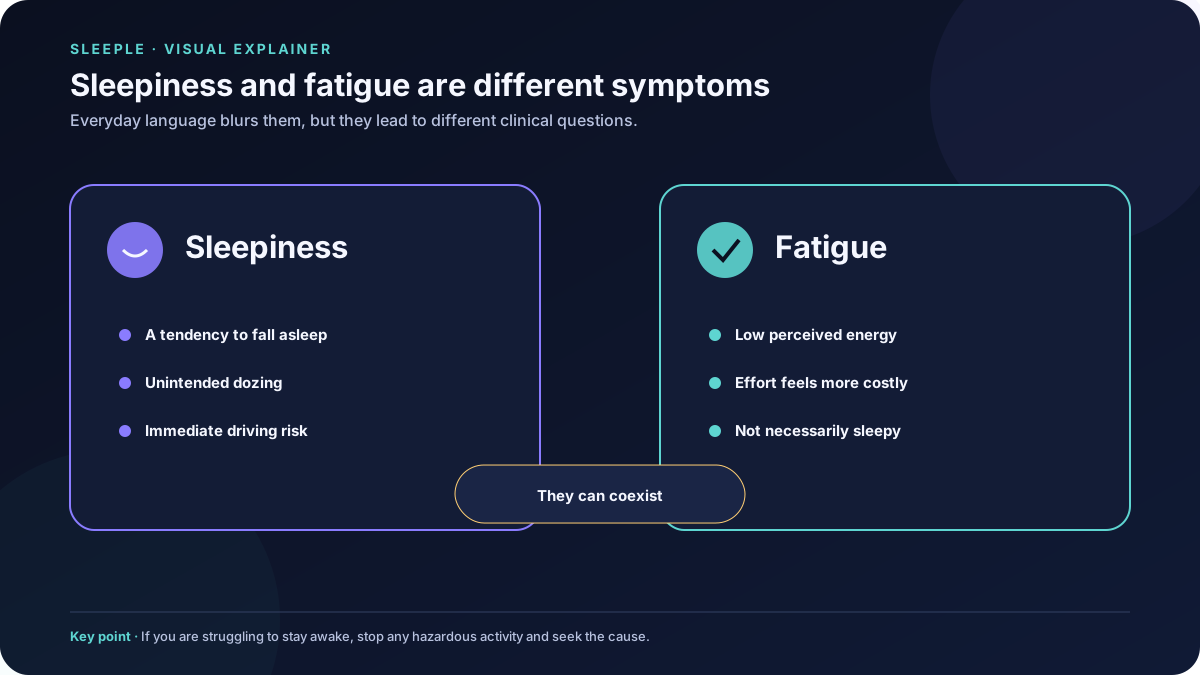
Sleepiness is a tendency to fall asleep. Fatigue is a sense of low energy, exhaustion or difficulty sustaining effort. A person can be fatigued without being able to sleep, sleepy without describing severe fatigue, or both at once. The distinction may sound semantic, but it changes the likely causes, investigations and immediate safety risk.
01Key points
- Sleepiness answers “could I fall asleep?”; fatigue answers “do I have energy?”
- Yawning, heavy eyelids, head nodding and microsleeps suggest sleepiness.
- Low energy, exertional exhaustion and reduced drive without dozing suggest fatigue.
- Both may coexist with insufficient sleep, apnoea, illness, depression or medication.
- Drowsy driving is an immediate safety problem, not a symptom to monitor until evening.
What is daytime sleepiness?
Assurance Maladie describes excessive daytime sleepiness as an unwanted need to sleep during the day, potentially leading to episodes that are more or less controllable. It is more specific than feeling sluggish after lunch.
Sleepiness commonly appears in monotonous situations: riding as a passenger, reading, attending a meeting, watching television or using public transport. As severity increases, dozing may occur in conversation, at work, while eating or driving. Very brief episodes may not be recognised; the person only notices that they lost the thread or crossed a road marking.
Features that suggest sleepiness
- repeated yawning;
- heavy eyelids and slow blinking;
- difficulty keeping the eyes open;
- head nodding;
- rereading the same line;
- brief gaps in awareness;
- unintended dozing;
- temporary improvement after a nap;
- actively fighting to stay awake.
An episode after an all-nighter is understandable. Frequent dozing despite adequate sleep opportunity needs analysis.
02What is fatigue?
Assurance Maladie describes asthenia as abnormal fatigue when it persists despite rest or interferes with activity. The word covers physical, cognitive and emotional exhaustion as well as reduced drive.
A fatigued person may want to lie down without falling asleep. Every task may feel costly, strength may seem low, sustained effort may be difficult and exhaustion may be present from the morning. Quiet rest can help without causing sleep.
Features that suggest fatigue
- feeling drained or without energy;
- ordinary effort feeling disproportionate;
- weakness or heaviness without drooping eyelids;
- difficulty starting or continuing a task;
- inadequate recovery after rest;
- breathlessness, pain, palpitations or another symptom depending on the cause;
- desire to rest but inability to nap;
- fluctuation with exertion more than monotony.
These signs do not diagnose an illness. They help create an accurate description for a clinician.
03Daytime sleepiness vs fatigue: quick comparison
| Question | Sleepiness more likely | Fatigue more likely |
|---|---|---|
| What happens when sitting quietly? | I may fall asleep | I rest but remain awake |
| Main sign | Heavy eyelids and dozing | Low energy and difficult effort |
| Common trigger | Monotony, driving, reading | Physical or mental activity |
| Effect of a nap | Often temporary improvement | Variable or none |
| Immediate risk | Microsleep and accident | Reduced activity and possible falls |
| Typical causes | Sleep loss, apnoea, medicines, hypersomnolence | Infection, anaemia, illness, pain, mood, overexertion |
The table cannot divide everyone into two groups. Sleep loss can cause both. Apnoea may produce low energy and genuine dozing. Depression can involve energy loss and disturbed sleep. The aim is to identify the dominant symptom, not force a binary label.
04A simple observation exercise, not a diagnosis
For one week, note three points each day: morning, afternoon and evening. Ask:
- If I sit quietly for five minutes, might I fall asleep?
- Do I have to fight to keep my eyes open?
- Do I have energy for an activity I choose?
- Does light effort cause unusual exhaustion?
- Does a nap improve the state, and for how long?
Add sleep duration, timing, naps, medicines, alcohol, caffeine, observed snoring and physical symptoms. Never perform this exercise while driving. If you already struggle to remain awake, the safety decision comes before the diary.
05Why does the distinction matter?
Immediate safety
Sleepiness impairs attention and can produce microsleep. The CDC describes the association between insufficient sleep, falling asleep at the wheel and crashes. Opening the window, loud music or a phone call does not restore dependable alertness.
If fighting sleep, do not start driving or stop somewhere safe. A break and, where feasible, a nap may be safer than continuing, but they do not guarantee fitness if sleepiness remains. Arrange another form of transport.
Selecting investigations
Sleepiness directs attention toward sleep opportunity, sleep quality, shift work, sedating medicines, apnoea, central hypersomnolence and other sleep disorders. Isolated fatigue broadens the search toward infection, anaemia, thyroid disease, cardiac or respiratory disease, pain, cancer, inflammatory illness, mental health and medication effects.
A clinician does not order every investigation for every person. History, examination and associated signs determine which tests are relevant.
Avoiding the wrong response
A fatigued person may extend time in bed without sleeping and perpetuate insomnia. A sleepy person may use increasing caffeine to mask a breathing disorder. Accurate language does not produce the diagnosis, but it reduces automatic solutions.
06Common causes of daytime sleepiness
Insufficient sleep
The direct cause is not obtaining enough sleep for individual needs. Work, commuting, screens, caregiving, leisure, anxiety and variable schedules can all reduce opportunity. Examine the real schedule rather than time in bed alone. Our sleep-debt guide helps analyse the pattern without inventing a minute-by-minute balance.
Fragmented sleep and obstructive sleep apnoea
Obstructive sleep apnoea causes repeated airway obstruction and arousal. Assurance Maladie lists loud snoring, witnessed pauses, choking, nocturia, morning headaches and sleepiness. Body size does not exclude the condition; thin people can also have it.
A watch or app cannot confirm or rule out apnoea. Respiratory polygraphy or polysomnography may be chosen according to the clinical profile.
Shift work and circadian timing
Night work requires alertness when the circadian system supports sleep, followed by sleep when it supports wake. The result can be sleepiness at work and shortened daytime sleep. Rapid rotations make adaptation difficult.
The plan depends on shifts, commuting, light and responsibilities. Involve occupational health and read our circadian-rhythm guide.
Medicines and substances
Sleeping tablets, anxiolytics, some antihistamines, analgesics, anti-seizure medicines, antipsychotics and other drugs can cause drowsiness. Timing, combinations, alcohol and kidney or liver function alter the effect.
Do not stop prescribed medicine. Ask a doctor or pharmacist whether the symptom fits the medicine and whether safe adjustment is possible. Check non-prescription cold and allergy products as well.
Narcolepsy and central disorders of hypersomnolence
Narcolepsy and other central hypersomnolence disorders are less common than insufficient sleep or apnoea but require specialist assessment. Irresistible sleepiness may occur with other characteristic features depending on the condition. Fast sleep onset is not enough for self-diagnosis.
Assessment may involve detailed history, a diary, actigraphy, overnight polysomnography and a multiple sleep latency test conducted under a protocol. Preparation and context are essential to interpretation.
Insomnia
Insomnia often causes fatigue and can produce sleepiness, although some people feel exhausted without being able to nap. Sleep-related fear, hyperarousal and excessive time in bed may dominate. CBT-I is the recommended first-line treatment for chronic insomnia.
07Common causes of fatigue
Infection and inflammation
An acute infection can cause exhaustion with fever, pain or other symptoms. Inflammatory disorders and post-infectious conditions can also produce persistent fatigue. Timeline, examination and associated features guide assessment.
Anaemia and deficiencies
Anaemia may cause pallor, breathlessness, palpitations, headache or fatigue, but these signs are not specific. A blood test is needed. Do not take iron at random: excess can be harmful and the reason for anaemia needs identification.
Thyroid and metabolic conditions
Thyroid disorders and other metabolic diseases can affect energy. Fatigue alone cannot establish a hormone imbalance. Tests are selected from symptoms, history and examination.
Heart and lung disease
Unusual breathlessness, chest pain, swelling, palpitations or reduced exercise tolerance may accompany a cardiorespiratory cause. Acute chest pain, major breathing difficulty or collapse requires urgent help.
Pain and chronic illness
Pain consumes resources, limits activity and fragments sleep. Chronic illness can cause fatigue through its biology, treatment and psychological burden. “Sleep better” is not a complete management plan, even when sleep is relevant.
Mental health and burnout
Depression, anxiety, prolonged stress and burnout may involve fatigue, slowing, concentration difficulty and disturbed sleep. Fatigue alone cannot diagnose any of them. Loss of interest, very low mood or suicidal thoughts require prompt help.
Medicines
A drug can cause fatigue without obvious dozing, or both fatigue and sleepiness. Record symptom onset relative to treatment and seek advice. Do not attribute the effect to the drug without also considering the condition being treated.
08Can sleepiness and fatigue occur together?
Yes, commonly. Someone with apnoea may lack energy, experience cognitive difficulty and doze. Infection may cause exhaustion and longer sleep. A chronically restricted person may first say “fatigue,” then recognise dozing on the train.
Describe two axes:
- sleep propensity: low, moderate or high;
- energy: preserved, reduced or very reduced.
This avoids a forced choice. It also helps monitor change: treatment may reduce dozing before restoring full energy, or the reverse.
09How is sleepiness evaluated?
Assurance Maladie describes the interview, examination and potential investigations. The clinician asks about schedule, duration, naps, circumstances of dozing, medicines, snoring, work and consequences.
Questionnaires such as the Epworth Sleepiness Scale can standardise the likelihood of dozing in several situations. This page does not reproduce the full scale. Use an authorised version and interpret it in context. A score neither replaces diagnosis nor determines driving fitness by itself.
Depending on the suspected cause, assessment may include:
- a sleep diary;
- actigraphy;
- respiratory polygraphy or polysomnography;
- specialist alertness or sleep-latency tests;
- targeted blood tests;
- mental-health and medication review.
How is fatigue evaluated?
The history covers onset, course, exertion, rest, sleep, nutrition, weight, fever, pain, breathing, bleeding, mood, menstruation, illness and treatment. Examination directs testing.
There is no identical “fatigue panel” for everyone. Ordering a vast list without a clinical question may create incidental results. Conversely, persistent fatigue or fatigue with specific signs should not be dismissed. The clinician selects relevant tests.
11What can you do today?
When sleepy
- Remove driving and hazardous tasks.
- Check whether sleep opportunity is sufficient.
- Record actual dozing, not fatigue alone.
- Ask a partner about snoring and pauses.
- Review medicines and alcohol professionally.
- Arrange assessment if sleepiness is repeated or unexplained.
A nap may temporarily lower sleep pressure, but persistent sleepiness afterwards remains concerning. Caffeine does not treat the cause.
When fatigued
- Reduce load temporarily where needed.
- Maintain gentle tolerated activity without forcing.
- Record associated symptoms and timing.
- Review food, hydration and sleep without assuming they explain everything.
- Seek advice if fatigue persists, worsens or limits activity.
Avoid starting multiple supplements before assessment. They can interact, mask symptoms or affect test results.
12When should you seek urgent advice?
Do not delay for:
- dozing at the wheel or a near-miss crash;
- uncontrollable sleep in active situations;
- loud snoring with breathing pauses or choking;
- fatigue with chest pain, major breathing difficulty, collapse or a neurological symptom;
- bleeding, unexplained weight loss, persistent fever or unusual pain;
- new confusion;
- very low mood, suicidal thoughts or extreme agitation.
Use emergency services for acute serious symptoms. Progressive sleepiness without immediate danger still deserves an appointment when it impairs life.
13Special situations
Pregnancy and the postnatal period
Fatigue is common, but anaemia, thyroid disease, mood, fragmented sleep and pregnancy complications remain possible. Extreme sleepiness or sudden fatigue with symptoms should not be automatically attributed to pregnancy. Ask before taking medicine or supplements.
Older adults
Fatigue and sleepiness may reflect several conditions and medicines. Fall and confusion risks require caution with sedatives. A recent change deserves assessment rather than an explanation based only on age.
Adolescents
Late timing and early school schedules can create major restriction. A teenager who sleeps in class is not simply lazy. Circadian timing, mental health, apnoea, substances and demands need consideration.
Shift workers
Sleepiness during the biological night is expected but remains dangerous. Employers and occupational-health services have responsibilities concerning schedules, breaks, transport and fatigue risk.
14Frequently asked questions
How do I know whether I am sleepy or just tired?
Imagine sitting quietly. If you might genuinely fall asleep, sleepiness dominates. If energy is low but you remain awake, fatigue dominates. Both can occur together.
Why am I tired but unable to sleep?
Stress, insomnia, pain, illness, depression and physical exhaustion can reduce energy without increasing sleep propensity. More time in bed is not always the answer.
Why am I sleepy after eight hours?
Time in bed is not time asleep. Individual need, previous debt, fragmentation, apnoea, circadian timing, medicine and illness may contribute. See tired after eight hours.
Can a nap test sleepiness?
Falling asleep quickly offers a clue, not a diagnosis. Sleep deprivation, timing and environment alter the result. Clinical tests use specific protocols.
Is the Epworth score enough?
No. It is a questionnaire supporting the history. Culture, routine and self-perception influence answers. It cannot replace immediate safety decisions or assessment.
Can caffeine hide a condition?
It may temporarily reduce felt sleepiness without correcting the cause. Escalating intake to get through each day should prompt a review of sleep loss, apnoea, medicine and other problems.
Is feeling sleepy after lunch normal?
A circadian dip in alertness can occur, but daily uncontrollable sleep is not something to normalise. Sleep duration, meal, medicines and associated features matter.
When is fatigue abnormal?
When it persists despite rest, worsens, limits activity or accompanies other signs. Duration alone does not decide; intensity and context guide consultation.
15Three examples that show how to describe the right symptom
“I fall asleep on the train but regain energy after a nap”
This pattern puts sleep propensity in the foreground. Actual sleep opportunity, timing, awakenings, shift work and medicine all need review. Ask about loud snoring and observed breathing pauses. Improvement after a nap cannot explain why sleepiness exists.
Safety comes before the label. Has the person also dozed while driving or during an active task? If so, transport must change immediately and clinical advice is needed.
“I am exhausted but lie awake for an hour”
Fatigue dominates and may coexist with insomnia or hyperarousal. Extending time in bed can increase the struggle. Stress, pain, mood, illness, physical load and treatment need assessment before matching the response.
This pattern illustrates why “exhausted” does not always mean sleepy. CBT-I may be relevant when chronic insomnia is present, while a general medical assessment remains important if fatigue extends beyond sleep.
“I have no energy and fall asleep everywhere”
Both axes are affected. Severe sleep restriction can do this, but apnoea, illness, medicine or several factors are possible. Do not choose between a sleep assessment and a general assessment based on intuition. Give the clinician the full timeline.
16Mistakes that delay the right assessment
| Reaction | What it can hide | More useful response |
|---|---|---|
| Saying only “I am tired” | Microsleeps and involuntary dozing | Describe situations in which the eyes close |
| Compensating with increasing caffeine | Sleep debt, apnoea or medicine effect | Record intake and assess the cause |
| Assuming deficiency and taking iron | Another cause or harmful excess | Confirm with indicated tests |
| Believing a watch rules out apnoea | Limits of consumer sensors | Clinical assessment and prescribed study |
| Going to bed much earlier without sleepiness | Perpetuated insomnia | Separate energy from sleep propensity |
| Waiting for a crash before stopping driving | The risk already exists | Change transport at the first warning |
A practical fourteen-day record
Create two separate scores from zero to three: tendency to sleep and low energy. Add sleep timing, number of dozes and what you were doing. High sleepiness during conversation or driving carries more weight than the same feeling while watching a late film.
During week one, avoid changing several variables. Look for a pattern across work days, free days, medication timing, short nights and exertion. In week two, restore an adequate sleep opportunity if it is missing and reduce one safe contributor, such as evening alcohol. Do not postpone a necessary appointment merely to finish the experiment.
Take the table to the consultation. It can show “fatigue is constant, but dozing occurs only after early shifts” or “I fall asleep every day despite stable adequate timing.” That precision can shorten the route to a relevant hypothesis.
18Why does rest have different effects?
Sleep lowers sleep pressure, so a nap may improve sleepiness caused by restriction. Fatigue may depend on exertion, inflammation, pain or illness that does not disappear after twenty minutes. Quiet rest can still reduce the load without causing sleep.
Improvement is not diagnostic proof. Coffee can temporarily increase alertness, a nap can help someone with untreated apnoea and a light day can ease symptoms of an illness. A home trial does not replace assessment when the problem continues.
What if a nap makes the situation worse?
Waking from deeper sleep can produce sleep inertia, especially after a long nap or substantial sleep loss. The person may feel worse for a period before improving. That response does not prove that naps are harmful or that a specific sleep stage is deficient.
If a nap repeatedly disrupts night sleep, adjust its timing and duration with guidance. If it is unavoidable for basic safety, such as before an alternative journey home, leave a recovery buffer and reassess the underlying sleepiness.
19Communicating driving risk honestly
People often minimise drowsiness because losing the ability to drive affects work and independence. Use concrete observations: missing an exit, drifting in the lane, not remembering the last kilometres, head nodding or needing repeated stops. These are not signs to “push through.”
Tell the clinician about occupational driving, night shifts and near misses. Laws and fitness-to-drive duties differ by country and diagnosis, so obtain local professional advice. This article cannot certify anyone as fit to drive.
Passengers and families should offer practical alternatives rather than argue during a journey. If the driver is drowsy, switch drivers or stop safely. A destination deadline does not change the biology.
20When normal tiredness becomes a pattern
Temporary low energy after an unusually demanding day is expected. Concern grows when fatigue is disproportionate, no longer improves with ordinary recovery, repeatedly limits activity or appears with new symptoms. Keeping a timeline distinguishes a recent infection from a problem developing over months.
Similarly, a sleepy afternoon after one short night differs from daily unintended sleep despite adequate opportunity. Frequency, context and progression turn a vague complaint into clinically useful information.
21What should family members observe?
A partner may notice snoring, breathing pauses, choking, repeated limb movements or dozing that the person minimises. Record the setting and frequency without turning the home into continuous surveillance. A factual statement such as “you fell asleep during three conversations this week” is more useful than “you are always tired.”
Family should intervene when a sleepy person intends to drive. Offer another driver, public transport or a safe stop. Avoid relying on an argument that coffee, cold air or determination will be enough.
22Can laboratory tests prove whether the symptom is fatigue?
There is no single laboratory marker for the everyday experience of fatigue. Tests identify or exclude particular causes suggested by the history. Normal initial results do not mean the symptom is imaginary; they guide the next clinical question.
Objective sleep tests also answer defined questions. They do not replace the person’s functional account. A useful assessment integrates physiology, symptoms, schedule and risk.
23A concise way to describe the symptom
Before an appointment, complete one sentence: “For the past ___, I have had unintended dozing, low energy or both, especially during ___, despite sleeping approximately ___.” Add any near miss while driving, observed breathing pauses, recent medicine change or new physical symptom. This sentence is not a diagnostic test. It simply separates what happened, when it began and how it affects safety or function. If the label remains uncertain, record sleepiness and fatigue separately rather than forcing one explanation.
24Conclusion
Sleepiness and fatigue overlap in everyday language but represent different dimensions. Sleepiness is the tendency to fall asleep; fatigue is low energy. Distinguishing them improves safety, clinical description and selection of investigations.
Start by observing actual dozing, energy, sleep, medicines and symptoms. Never drive while fighting sleep. Repeated sleepiness or persistent fatigue should not be managed only with caffeine, naps or supplements. The cause deserves to be understood.
25Main sources
Evidence last checked: 17 August 2026.
- Assurance Maladie — Daytime sleepiness: definition, symptoms and consequences
- Assurance Maladie — Consultation, diagnosis and treatment of sleepiness
- Assurance Maladie — What to do about sleepiness
- Assurance Maladie — Asthenia and fatigue
- Shen J et al. — Distinguishing sleepiness and fatigue
- NHS — Excessive daytime sleepiness
- Assurance Maladie — Sleep apnoea
- CDC — Drowsy driving and insufficient sleep
General information: this article does not replace assessment. Do not drive if you may fall asleep. Use emergency services for acute serious symptoms.
How this guide was built
Sleeple separates scientific evidence, verifiable specifications and marketing claims. Limitations are stated, and affiliate compensation never determines our conclusions. See our method →